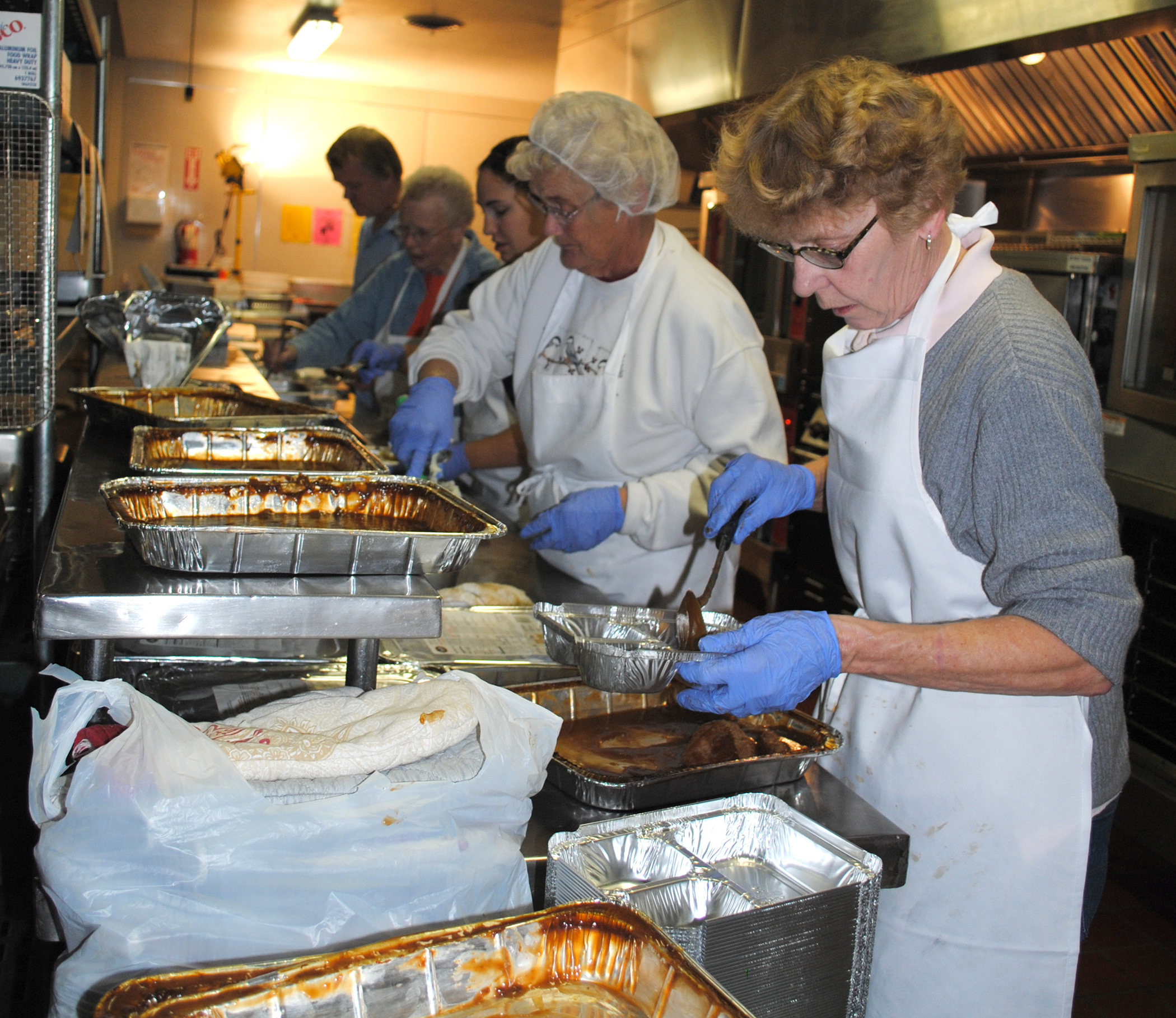
Helping out at a food pantry or checking on an aging neighbor may do more than earn you karma points. A new University of Texas at Austin study links volunteering to slower memory and thinking decline among people who carry APOE ε4, the gene variant most strongly tied to late-onset Alzheimer’s disease. Read the fine print before you call it a cure, though.
What the study found. Sae Hwang Han, a UT associate professor of human development and family sciences, and Jessica Faul of the University of Michigan’s Institute for Social Research published the work in the journal Alzheimer’s & Dementia (Vol. 22, Issue 9). The open-access paper draws on 22 years (1998–2020) of the Health and Retirement Study, a national survey of Americans 51 and older. It covers 17,972 people who gave DNA samples, so researchers knew each person’s APOE status. About a quarter carried one copy of ε4, and 2.3% carried two.
Among carriers, people who started volunteering and kept at it saw their scores on a short telephone cognitive test fall more slowly than their genes would predict. People who quit volunteering saw their decline speed back up. The gains showed up at modest levels, from 1 to 199 hours a year, or no more than about four hours a week. People who jumped to 200 or more hours a year showed no statistically significant benefit. The authors suggest that heavy helping can turn into its own strain.
“Very few pharmaceutical or lifestyle approaches have been shown to slow the decline driven by this gene variant,” Han said in the UT release. “But we found helping others — a free, accessible behavior — was linked to markedly slower cognitive decline for this group.”
The two-year number. UT’s release says people at the highest genetic risk who started and kept helping reached a significant level of cognitive impairment on a screening tool almost two years later than those who didn’t. In the paper, that figure comes from one model-based illustration: a hypothetical 60-year-old with two copies of ε4 who starts volunteering and keeps going. That’s the highest-risk group, and it makes up 2.3% of the sample. The figure isn’t an average across everyone studied.
Where the press release runs ahead of the paper. UT’s headline and release talk broadly about “helping others,” including informal help for friends, neighbors and relatives. In the paper, the clearest result is for formal volunteering through an organization. In the main models, informal helping across the full sample pointed in the same direction but did not reach statistical significance. It reached significance only in a sensitivity check that looked at results one survey wave later, and the authors say that result was driven mainly by Hispanic participants. Hispanic older adults were the one group where informal helping showed a clear protective association, a pattern the authors tie to cultural context. They note the Hispanic subsample was the smallest of the three groups studied. The benefit of formal volunteering did not differ significantly among white, Black and Hispanic participants.
The usual caveats. This is an observational study, not a trial, so it shows an association, not proof that volunteering causes the slower decline. The authors used models that compare each person with themselves over time, which helps account for stable traits that do not change over time. They also acknowledge several limits:
- The survey questions about helping were coarse.
- Unmeasured life changes that happen at the same time could still skew the results.
- Declining memory could itself make people stop volunteering.
The authors say intervention studies, such as the Experience Corps trial, would give stronger causal evidence. UT’s release adds that the study didn’t examine the biological mechanisms involved.
Who paid for it. The study was funded by the National Institute on Aging, including a grant to Han and one to UT’s Center on Aging and Population Sciences. A National Institute of Child Health and Human Development grant to UT’s Population Research Center also supported it. The authors declared no conflicts of interest, according to the paper. The Health and Retirement Study itself is sponsored by the National Institute on Aging and run by the University of Michigan, where Faul works.
If you want to try it anyway. The downside risk of a few hours a week of helping out is low. The City of Austin keeps a list of volunteer opportunities, and plenty of local nonprofits run on volunteer shifts.