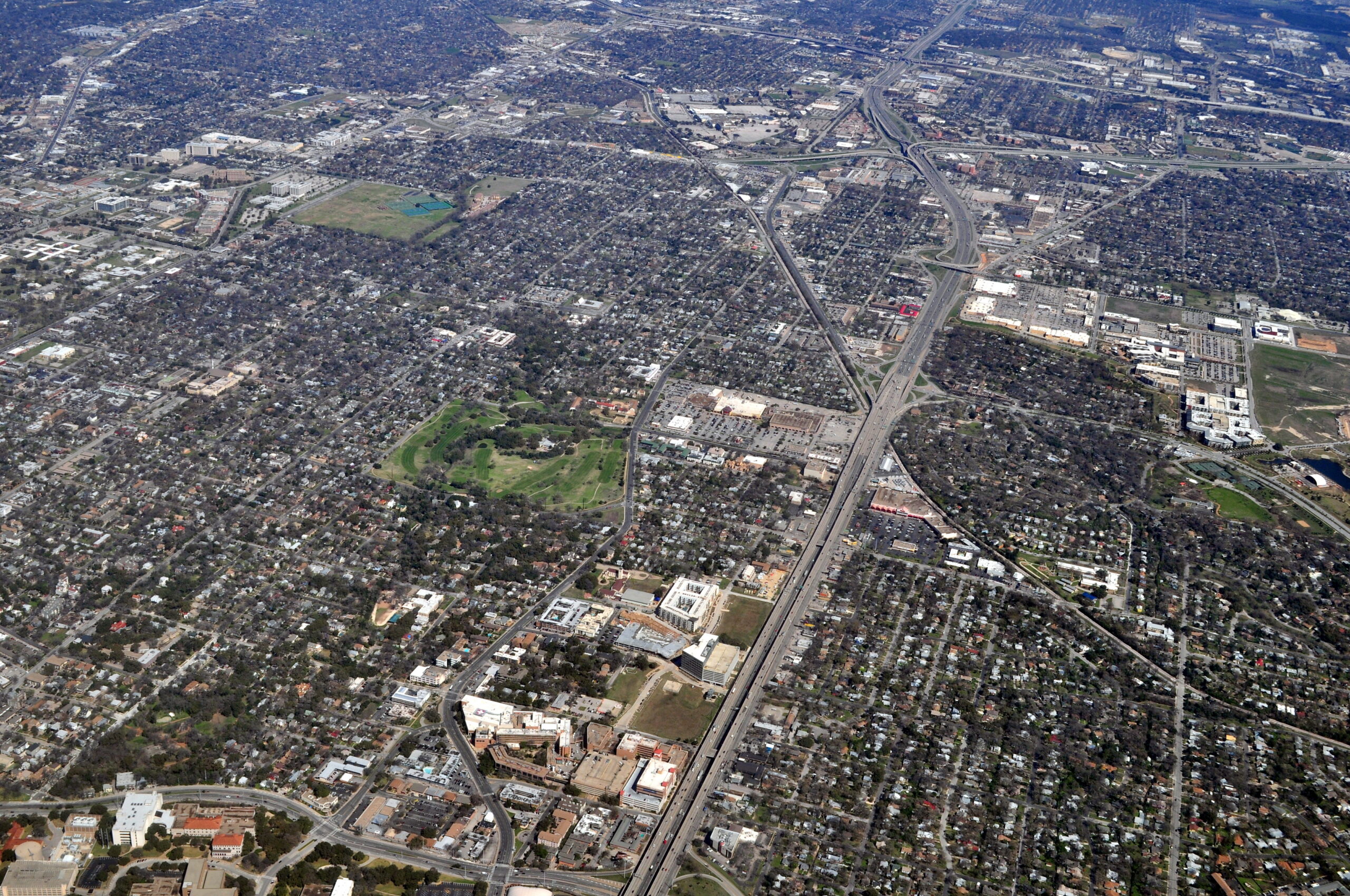
Austin City Council District 9 covers downtown, the University of Texas and Central Austin neighborhoods from Hyde Park and Cherrywood to Mueller and Bouldin Creek. Council Member Zohaib “Zo” Qadri is seeking a second term there. He won the seat in a 2022 runoff, Community Impact reported. Four challengers are on the City Clerk’s ballot applications list. In the order they appear on the corrected consolidated ballot, the five candidates are Rich Heyman, Katie Kam, Qadri, Dave Thadani and Kai Huang. Early voting runs through Oct. 30, and Election Day is Nov. 3.
The district. District 9 is young and mostly renters. The median age is 29, and nearly 70% of residents rent, compared with 60% citywide, according to an Oct. 12 Austin American-Statesman analysis by Austin Sanders. The Statesman put the median home sale price at $700,000 and average rent at $1,971. It also cited a 2024 HousingWorks report that found the district had reached about 39% of its 10-year affordable-housing goal. The city’s most recent point-in-time count found about one-third of people experiencing homelessness in Austin were sleeping in District 9, the Statesman reported.
Zohaib “Zo” Qadri. Qadri (zoforaustin.com) is running on his first-term record. His campaign site cites renter protections, the Red River Cultural District fund, student-housing changes in West Campus, a ban on windowless bedrooms, and homelessness and public-health programs. It also notes he was the lone vote against the five-year police contract. He told KUT he wants more housing and parking reform and called himself a “huge supporter” of Project Connect, though he said the scaled-back plan doesn’t go far enough. He opposes encampment sweeps, which he called “extremely inhumane.” He backs both city bonds. He opposes Prop I, the charter amendment requiring an outside financial audit every five years, and told KUT it “comes in bad faith.” In the Statesman’s story, Qadri defended his vote for Rowen Vale, a Travis Heights project with 64 apartments, 36 of them affordable, that neighbors had asked the council to delay. “Why wouldn’t I support it?” he told the paper.
Rich Heyman. Heyman (richforaustin.org) is a former UT urban studies professor. KUT reported that he was arrested and then fired by the university after an encounter with state police at a 2024 pro-Palestinian demonstration. Heyman has said the firing was retaliation for his political views. His campaign calls him “informed,” “unafraid” and “unbought.” He says the city should end tax incentives for large companies and redirect economic development to local businesses that pay a living wage. He told KUT he would “stop giving tax breaks to wealthy corporations and billionaires.” He backs more subsidized housing for very low-income residents and eviction prevention. He opposes Flock license-plate cameras and encampment sweeps, and he wants the city to take a hard look at whether Project Connect still makes sense. He supports both bonds and opposes Prop I, which he told KUT would be expensive and push the city toward cuts.
Katie Kam. Kam (katiekamforaustin.com) holds a PhD in civil engineering. Her site says she worked for the City of Austin as a planner for seven years, taught science at Austin High and Reagan High, and later served as assistant director of public works for the City of Pflugerville. Her priorities include affordable housing, including expanding Mueller’s affordable-housing model; transportation; and what she calls cost-efficient government. “We shouldn’t be raising taxes,” she told KUT. She told KUT she is still “on the fence” about the parks and library bonds and supports Prop I. She didn’t vote for Project Connect and prefers an elevated monorail to street-level light rail. She supports continuing what she called “compassionate cleanups” of encampments, along with the city’s No Wrong Door initiative, KUT reported. Her site says council races are nonpartisan but that she votes Democratic in partisan races.
Dave Thadani. Thadani is a UT student, according to the Statesman. He wants to amend the HOME initiative so affordable units are occupied and owned by families, working-class residents and students. He also wants to expand the University Neighborhood Overlay, the zoning plan behind much of the new housing around campus. He did not respond to KUT’s interview requests or Community Impact’s questionnaire.
Kai Huang. Huang works in cryptocurrency and has a background in sales, marketing and accounting, KUT reported. He told KUT he wants more policing downtown, more student housing near campus and permitting reform. He supports Prop I. He opposes Project Connect and would rather the city invest in what he called “AI infrastructure” to improve traffic. He was not familiar with the bond propositions, KUT reported. The Statesman reported that Huang has no campaign information online and did not respond to its inquiries.
The money. The 30-day pre-election reports cover July 1 to Sept. 24 and are posted on the City Clerk’s campaign finance page. Qadri raised $11,545 and spent $26,219.32, and he reported $137,709.33 on hand in a corrected report filed Oct. 7. His original Oct. 6 report listed $137,826.33, and the correction affidavit says the cash on hand needed to be fixed. Heyman raised the most in the period, $19,817. He spent $12,119.29 and reported $39,044.89 on hand and $20,000 in outstanding loans. Kam raised $10,235, spent $5,983.87 and had $7,315.31 on hand. Thadani reported $50 raised, $207.54 spent and $110.03 on hand. As of Oct. 19, the clerk’s finance page listed no reports for Huang. The 8-day reports are due Oct. 26. The clerk’s ballot list also shows which candidates filed the city’s candidate contract, a voluntary pledge under the Austin Fair Campaign Chapter: Heyman and Kam did; Qadri, Thadani and Huang did not.
Outside money. A political committee called Zo Must Go reported $10,700 in contributions in its 30-day report. All of it came in five contributions from Austin United PAC between Sept. 3 and Sept. 29. Zo Must Go reported two $5,000 payments to Cosmic Mountain Strategies, with a Sheridan, Wyoming, address, both listed as advertising expenses. Austin United PAC endorses both Heyman and Kam. Its site says District 9 needs new leadership and tells voters to pick whichever of the two fits their priorities. The Statesman reported that Austin United has opposed expansion of the Austin Convention Center.
Endorsements. The Austin Central Labor Council and AURA, the pro-housing, pro-transit group, endorse Qadri. Qadri’s site also lists endorsements from Mayor Kirk Watson, U.S. Rep. Lloyd Doggett and state Reps. James Talarico and Gina Hinojosa, who are on the Nov. 3 ballot themselves as the Democratic nominees for U.S. Senate and governor. The Austin Chronicle editorial board endorsed Heyman, citing concerns about what it called the council’s pro-development tilt. The League of Independent Voters endorses Kam, and her site says the Forward Party does too.
Watch and listen. ATXN has posted the city’s Sept. 29 District 9 candidate panel, a Spanish-language version and recorded statements from Heyman, Kam and Qadri. All are linked from the city’s voter resources page. Heyman, Kam and Qadri also took part in a forum hosted by the Austin Current, KUT and Austin PBS, and The Austin Common has posted podcast interviews with the three.
How to vote. If no candidate wins a majority, the top two advance to a runoff on Saturday, Dec. 12, according to the City Clerk. Travis County voters may use any county early voting or Election Day site. Mail ballot applications must be received by Friday, Oct. 23. Sites, hours and live wait times are at VoteTravis.
Candidate positions are drawn from campaign websites, KUT’s Oct. 19 candidate profiles, the Statesman’s Oct. 12 race story and Community Impact’s questionnaire. Quoted words come from those published written accounts and are attributed. Campaign finance figures come from the reports filed with the City Clerk.