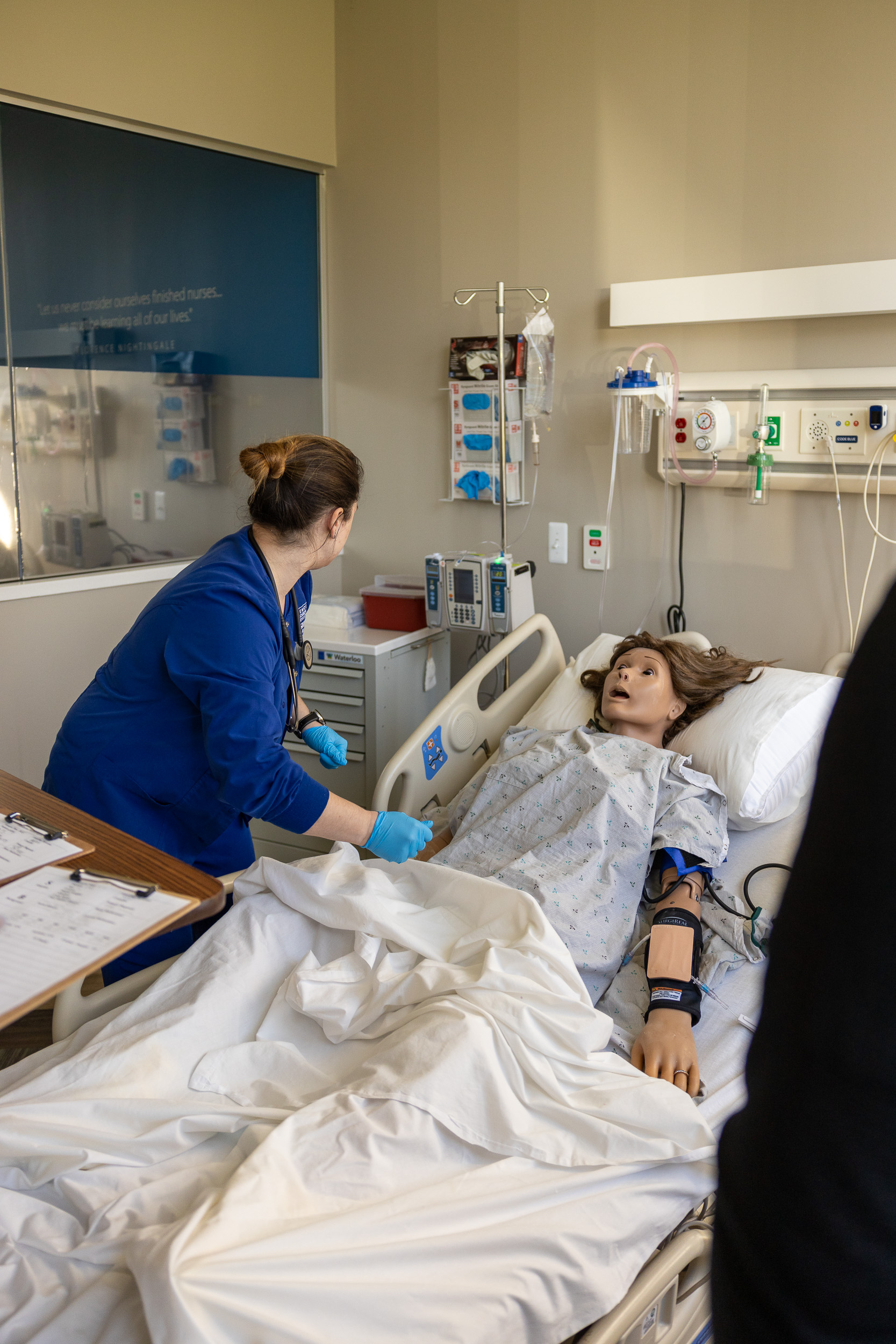
Hospitals run 24 hours a day. Nursing school, mostly, does not. Austin Community College wants to change that, and the state just handed it $750,000 to try.
ACC announced Oct. 19 that it received a $750,000 Nursing Innovation Grant from the Texas Higher Education Coordinating Board to build what it calls the NightShift+ Preceptor Academy. The two-year project is meant to create evening and overnight clinical placements for nursing students, who usually do their hands-on hospital training during the day.
The money isn’t exactly breaking news in Austin. Gov. Greg Abbott announced the awards Aug. 7: $5,659,861 split among eight Texas colleges and universities for a grant period that started Sept. 1 and runs through Aug. 31, 2028. ACC’s $750,000 ties Sam Houston State University and the University of Houston for the largest award on the list, according to the Coordinating Board’s announcement.
What ACC says it will do. According to the college, the grant will pay to:
- Create about 20 additional clinical placement opportunities over two years
- Train at least 20 experienced nurses to work as night-shift clinical preceptors
- Give participating students specialized onboarding and simulation-based preparation before their clinical rotations
- Provide coaching and support for faculty working the evening and night-shift model
- Strengthen partnerships with local health care employers
ACC says the project is still in the planning stages. The release doesn’t name any hospital partners.
Why night shift. ACC frames the project as a fix for a longstanding problem in nursing education: limited clinical capacity. Students can’t get licensed without supervised hours with real patients, and there are only so many hospital units and experienced nurses to go around during daytime hours.
State data back up the general point. In the 2024-25 academic year, Texas professional nursing programs did not offer admission to 9,838 of 37,240 qualified applications, or 26.4%, according to the Texas Center for Nursing Workforce Studies’ 2025 admissions report. Programs that turned applicants away ranked lack of clinical space as their No. 1 reason, ahead of a lack of qualified faculty. Programs listed competition with other schools, limited capacity at clinical sites and BSN programs getting priority over associate degree programs among the specific problems. That last one matters for ACC, which trains RNs through an associate degree.
But ACC wasn’t turning people away. ACC’s own numbers in the same state survey tell a different story. Its associate degree RN program reported 405 seats for new students, 368 qualified applications and admission offers for all 368 in 2024-25, according to the program-by-program spreadsheet. The program had 657 pre-licensure students enrolled as of Sept. 30, 2025, and graduated 322 that year.
So at least for its RN program, ACC’s problem last year wasn’t a line of qualified applicants left at the door. ACC says the night-shift model will give students more scheduling options and expand the number of clinical experiences available. It also says the project is designed to help students stay in school by preparing them for barriers to finishing. The release doesn’t say where the squeeze hits ACC hardest.
The math. Twenty new placements over two years for $750,000 works out to about $37,500 per placement. That’s not a fair price tag on its own, though, because the grant also pays for preceptor training, simulation prep and faculty coaching. ACC says the model could be expanded to more clinical partners later.
Austin’s other winner. The University of Texas at Austin also made the list, with $459,840. UT’s School of Nursing said in August that Dr. Amanda Alvarado will use it to evaluate an AI simulation platform that lets prelicensure students practice communication skills, with feedback, before they reach clinical settings.
The Legislature created the grant program in 2023 and added money in 2025, according to the governor’s office. In the August release, Abbott said, “These grants fund innovative programs that prepare more nurses for service in communities across the state.”
ACC’s nursing ladder runs from a fast-track certified nurse aide course to vocational nursing, the associate degree RN program and an RN-to-BSN bachelor’s pathway.