Last winter, more Travis County residents than ever picked a health plan on HealthCare.gov, even as federal help shrank. This fall, they head into open enrollment on Nov. 1 facing a second straight year of double-digit price requests, a hometown insurer pulling out of the market and Central Health’s own health plan asking for a 31.1% increase.
Open enrollment for 2027 coverage runs from Nov. 1 through Jan. 15, 2027, according to HealthCare.gov. People who want coverage to start Jan. 1 have to pick a plan by Dec. 15. Texas uses the federal marketplace, so that’s where Austinites shop.
The stakes are bigger here than most people realize. A lot of working Austin, from gig drivers and musicians to restaurant workers and small-business owners, gets its health coverage this way.
The numbers. During the open enrollment that ended in January, 184,355 Travis County residents picked a marketplace plan, according to the Centers for Medicare & Medicaid Services’ county-level data. That’s up 27% from 144,947 the year before, in CMS’ 2025 figures. These are plan selections, not people who paid their first premium, so the number actually covered is lower.
Neighboring counties went the other way. In the same CMS files, Williamson County slipped from 63,930 to 63,546 plan selections and Hays County fell from 22,164 to 20,420.
Travis County’s marketplace is mostly made up of people with modest incomes. In the 2026 CMS data, 110,063 Travis enrollees, about 60%, reported household incomes between 100% and 150% of the federal poverty level. About 88% got an advance premium tax credit. Among them, the average credit was $562 a month and the average premium after the credit was $58.
Even so, costs went up. Across all Travis enrollees, the average monthly premium before subsidies rose from $589 in 2025 to $625 in 2026. The average after tax credits rose from $113 to $130, about 15%.
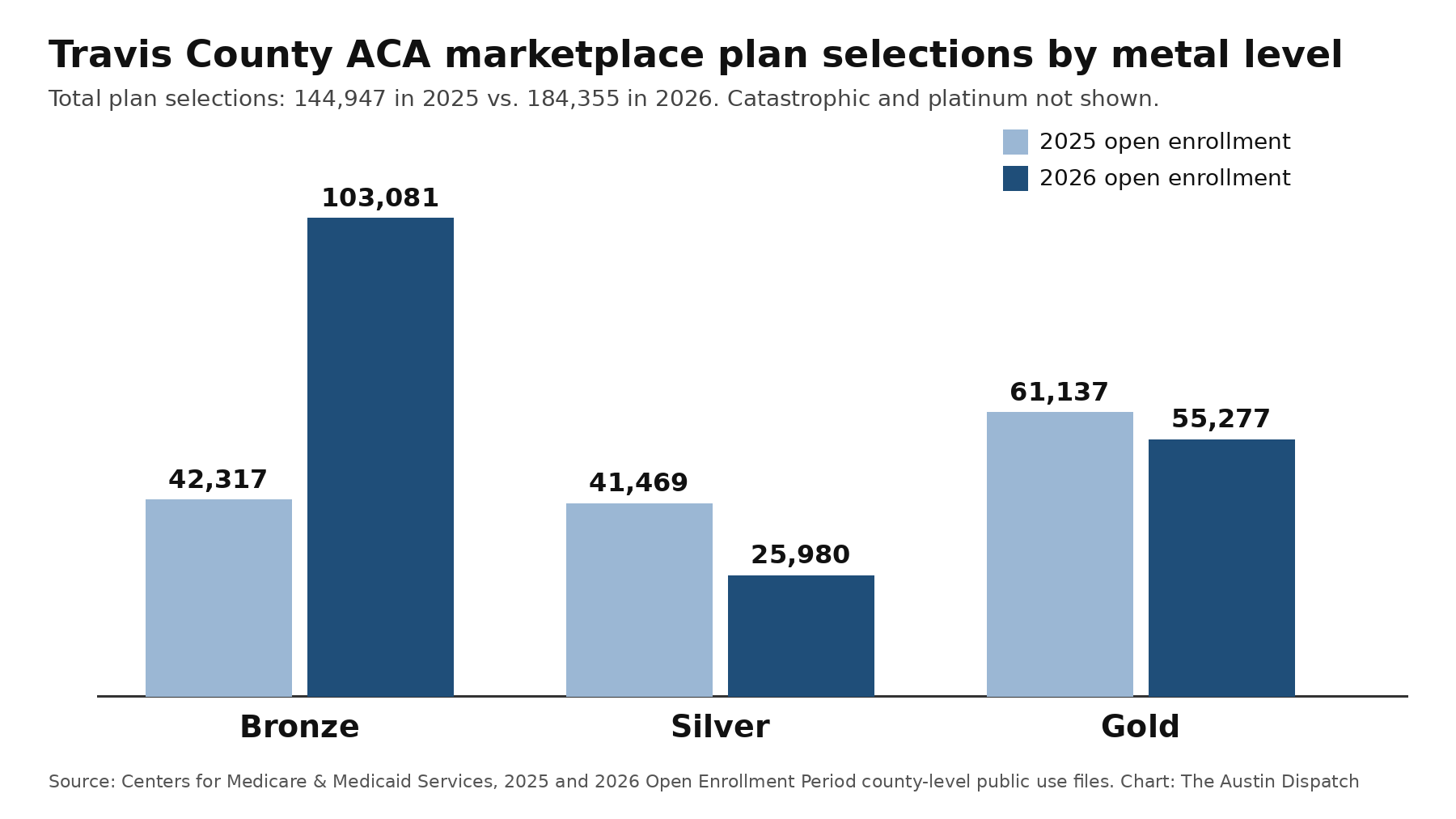
Trading down to Bronze. The clearest sign of pressure is which plans people picked. Travis County Bronze selections, the plans with the lowest premiums and the highest deductibles, jumped from 42,317 in 2025 to 103,081 in 2026, according to CMS. Bronze went from about 29% of the county’s plan selections to about 56%. Silver selections fell from 41,469 to 25,980, and Gold from 61,137 to 55,277.
A Bronze plan can keep the monthly bill low and still leave a family owing thousands before coverage really kicks in. Researchers at Georgetown University’s Center on Health Insurance Reforms, writing for the Commonwealth Fund on Oct. 8, warned that more consumers buying down to cheaper, higher-deductible plans would leave more people underinsured and more exposed to medical debt.
Why 2026 was different. The enhanced federal premium tax credits in place from 2021 through 2025 expired at the end of 2025, the Commonwealth Fund researchers wrote. Without them, the old subsidy cliff is back: they wrote that individuals earning more than $63,840 and families of four earning $132,000 or more now get no help at all. In Travis County, enrollees reporting incomes above 400% of the poverty level dropped from 11,829 to 8,967 between the 2025 and 2026 CMS files.
What insurers want for 2027. Insurers selling in Texas’ individual market have filed for increases averaging about 14.1%, weighted by enrollment, according to a tally by ACA Signups drawn from the preliminary filings in the federal rate review database. Nationally, the Commonwealth Fund researchers put the median proposed increase at 15%. These are requests. What a household actually pays depends on its plan, age, ZIP code and subsidy, and final 2027 prices will show up when shoppers compare plans on HealthCare.gov.
Central Health’s insurer asks for 31.1%. One of the steepest Texas requests comes from inside Austin’s public health system. Central Health, the Travis County hospital district, created Sendero Health Plans in 2011. Central Health says Sendero sells plans on the ACA marketplace and covers medically complex, low-income patients through its premium assistance program.
In its filing justification with federal regulators, Sendero proposed an overall 31.1% increase for its individual plans, on and off the marketplace, for 2027. By plan, the increases range from 30.3% to 35.2%. The filing reported 37,847 policyholders as of March. It blamed higher reimbursement rates to hospitals and providers, along with rising pharmacy use and prices and a shift to high-cost specialty drugs. Sendero said it expects the new rates to produce a medical loss ratio of 93%, meaning about 93 cents of each premium dollar would go to care, above the ACA’s 80% minimum.
Central Health is funded largely by Travis County property taxpayers, so Sendero’s finances are a public question as well as a consumer one. Central Health says its Board of Managers posts meeting agendas at least three business days ahead of time. Its next regular meeting is Oct. 28. As of Friday morning, the agenda for that meeting wasn’t posted on the district’s site.
A Central Texas insurer exits. Baylor Scott & White Health Plan, the insurance arm of the Temple-based hospital system, says on its website that it notified regulators it will discontinue its individual marketplace plans after Dec. 31, 2026. The company says current coverage stays in place through the end of the enrollment period, and Baylor Scott & White will keep accepting marketplace insurance plans. Members in its plans will need to choose a new insurer for 2027. The Commonwealth Fund researchers listed Baylor Scott & White Health Plan among at least seven insurers nationally leaving the marketplace for 2027.
Don’t coast on auto-renew. In the 2026 CMS data, 74,804 Travis County enrollees, about 41%, were automatically re-enrolled instead of actively choosing a plan. That’s a bigger share than in Williamson (15,317 of 63,546) or Hays (5,797 of 20,420). With prices changing and at least one insurer leaving, last year’s plan may not be this year’s deal.
Federal changes will also make the 2027 marketplace harder for some people to use. The Commonwealth Fund researchers wrote that new paperwork requirements will make enrolling harder, and that many lawfully residing immigrants will lose access to the financial help that keeps premiums affordable.
Where to get free help. Foundation Communities’ Prosper Health Coverage offers free help from federally certified enrollment counselors who aren’t paid by insurance companies. It’s open to anyone regardless of income or immigration status. Get Ready appointments are open Oct. 19-30, and the program can be reached at 512-381-4520. Its Prosper Centers are at 601 W. Braker Lane in North Austin and 2900 S. Interstate 35 Frontage Road in South Austin. HealthCare.gov also lists other local helpers.
Why it matters. Austin talks a lot about rent, and it should. But for about 184,000 Travis County residents, health insurance is another big monthly bill that keeps climbing. When people trade down to Bronze plans with high deductibles, or drop coverage entirely, the costs don’t go away. They turn up as skipped prescriptions, emergency room visits and medical debt, and eventually in the budgets of Central Health and the safety-net clinics taxpayers already fund. Five weeks of comparison shopping, starting Nov. 1, is one of the few chances households get to push back.