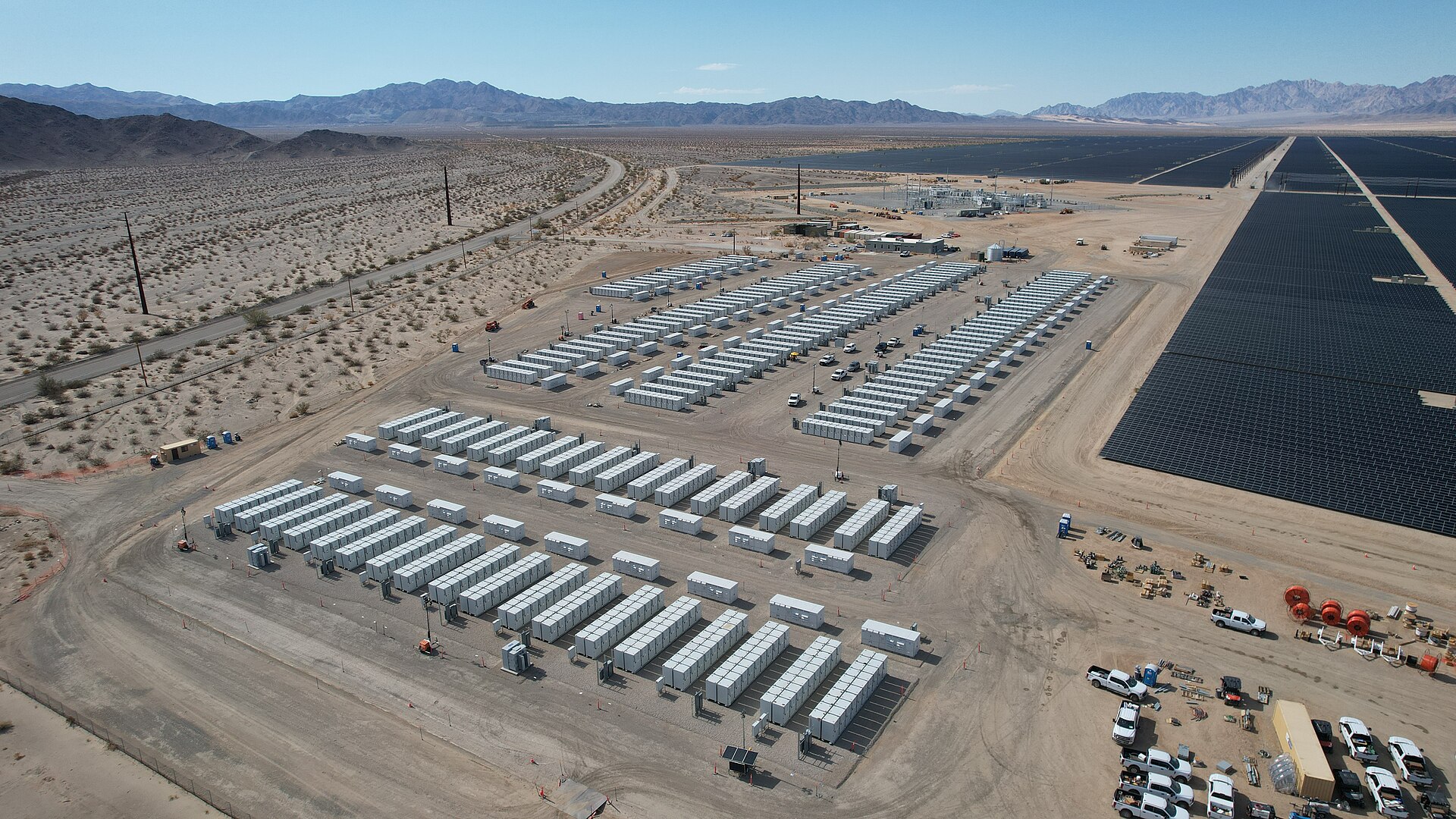
Austin Energy is betting bigger on batteries. The city-owned utility says it has finalized a deal with Jupiter Power for up to 200 megawatts of battery storage, expected to start commercial operation in 2030.
The Oct. 28 release says the deal pushes Austin Energy’s battery portfolio to 340 megawatts, past the 300-megawatt figure in its Resource, Generation and Climate Protection Plan. (Austin Energy posted the same release on its own site.) The plan’s actual target is softer than “build 300”: the release describes it as studying the feasibility of installing 300 megawatts by 2030.
“Battery storage is a crucial tool for balancing our grid,” Austin Energy General Manager Stuart Reilly said in the release.
What it is. It’s a 200-megawatt, two-hour battery, which works out to about 400 megawatt-hours of stored electricity. That’s about the same amount of energy as Jupiter’s first Austin battery, which stores half the power for twice as long. The utility says the new battery will help shield it from local wholesale price spikes and give it power it can call on when needed. Jupiter, which says it was founded in Austin, will build and maintain it. The release stresses that Austin Energy won’t have to invest in construction or upkeep.
What it costs. The deal is with Balcones Ridge Resiliency II LLC, a Jupiter subsidiary, for up to $16 million a year over as many as 20 years, capped at $320 million in total. Council approved it on consent on July 23, so there was no debate on the dais. The backup also says who pays: like power purchase agreements, battery storage costs are recovered through the Power Supply Adjustment, the pass-through charge on every Austin Energy bill. So “no investment” means the utility isn’t building anything. Customers still pay the tolling fee.
For comparison, Jupiter’s first deal, approved in July 2025, was for 100 megawatts at up to $14.4 million a year, or $288 million over 20 years. That one is a four-hour battery due online by the end of 2027. By our math, the new deal costs about $6.67 per kilowatt of capacity a month at the cap, against $12 for the first. That’s cheaper per megawatt, but not much different per megawatt-hour stored.
The deal that wasn’t. Jupiter wasn’t the first pick. According to the Council backup, Austin Energy’s November 2025 all-resource request for proposals first produced a May 21, 2026 authorization for a 100-megawatt battery from OCI Energy LLC. The utility favored OCI’s project because it would have put storage in a different part of the system. Then the two sides couldn’t agree on commercial terms. Jupiter, which had pitched more batteries at its Austin site already under development, got the nod instead, and at twice the size.
Where. A 2025 Austin Energy general manager’s report put Jupiter’s first project in eastern Travis County, outside city limits. A September Council item granted LCRA a transmission easement across city-owned land at 18524 FM 969, along Blake Manor Road, to carry that battery’s power. The release says the new battery is going at Jupiter’s existing Austin site. We haven’t found a document confirming that the two projects share the same parcel.
The bigger fight. Batteries are also at the center of Austin’s argument over gas. Austin Energy plans to spend about $1 billion on new gas-fired peaking capacity. On Oct. 20, the city’s Resource Management Commission asked Council for an independent study of whether batteries and other carbon-free resources could complement or replace that plant. Wednesday’s announcement doesn’t mention the peaker. It does show the utility can line up hundreds of megawatts of storage without owning any of it, which is likely to come up when Council takes up the commission’s request.
Jupiter Power Chief Operating Officer Jack Godshall said in the release that the company’s “deep roots in Austin” make the projects especially meaningful.