Austin Animal Services finished the 2026 fiscal year with more animals coming in than going out, the shelter’s leaders told the city’s Animal Advisory Commission on Oct. 12. That leaves the city shelter crowded heading into the new budget year. Volunteers told the commission that many dogs are going a day or more without a walk. The director defended housing dogs two to a kennel as a way to keep animals alive while space is tight.
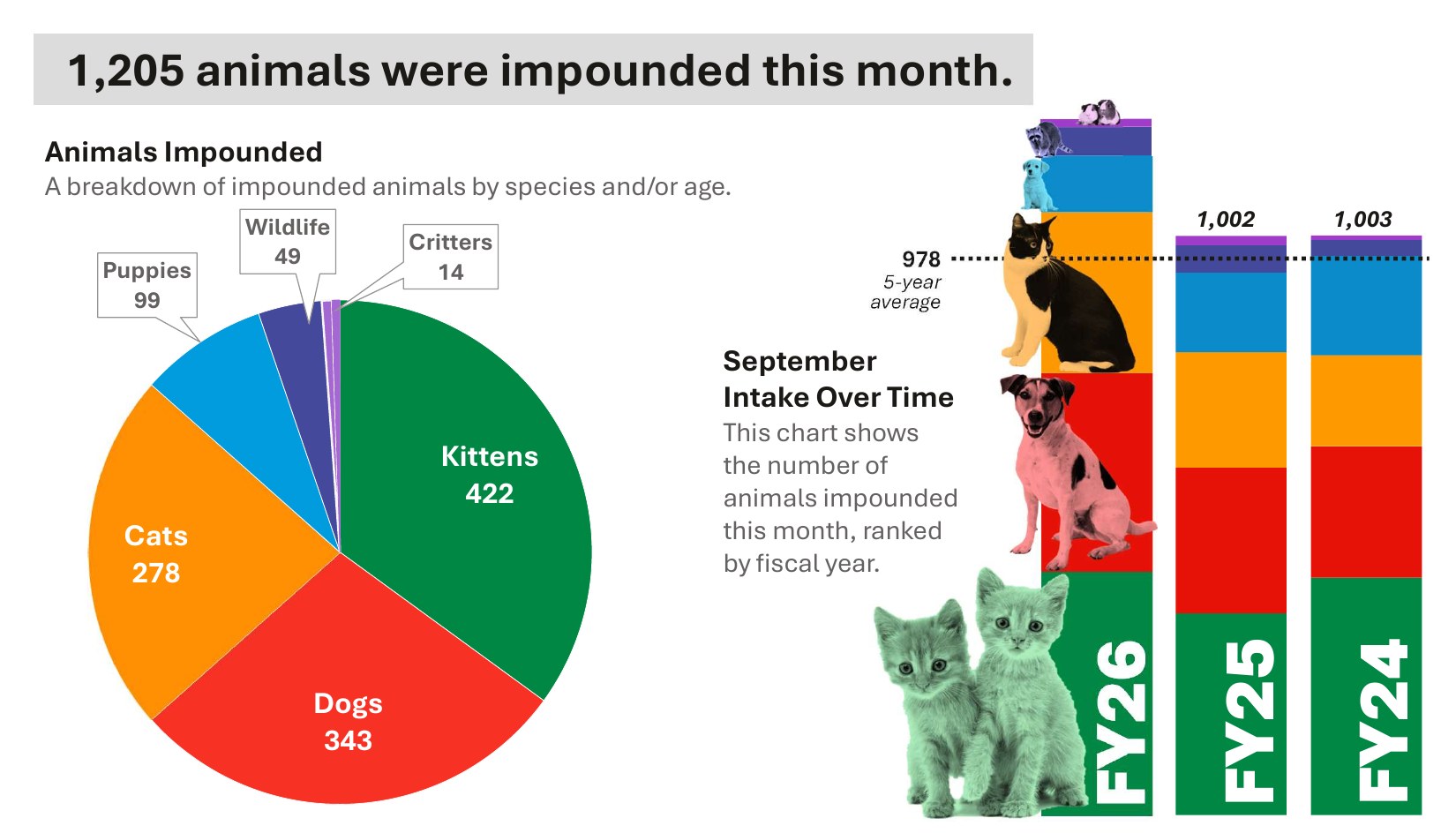
The numbers. The shelter took in 11,601 animals from Oct. 1, 2025, through Sept. 30, 2026, and recorded 11,465 outcomes, a gap of 136, according to the year-end report. Dogs accounted for 100 of that gap and cats for 36. Assistant Director Jason Garza told the commission that the shelter ended the year slightly behind. He said the gap was smaller than in previous years, but the shelter still hadn’t reached a net positive, according to the meeting video. In September alone, the shelter impounded 1,205 animals, about 200 more than in September of either of the past two years, according to the staff presentation. Other September figures from the presentation:
- Live outcomes. The live-release rate was 97.47%. The shelter recorded 535 adoptions and returned 110 animals to their owners, and 16 rescue partners pulled 358 animals.
- Euthanasia and deaths. Thirty animals were euthanized and 11 died in the shelter’s care.
- Foster. As of Oct. 1, 319 animals were in foster homes.
For the full year, the shelter euthanized 115 dogs and 261 cats, according to the year-end report.
Volunteers’ concerns. Several volunteers spoke during public comment, according to the meeting transcript. They said dogs, especially those housed in pairs or kept in crates in a multipurpose room, often go more than a day without a walk. Some asked the commission to recommend that the Council pay for three full-time dog walkers at the Austin Animal Center. They also asked the shelter to report how many dogs go without an individual walk each day. Others raised broken kennel gates, poor lighting and the handling of senior dogs. Some speakers questioned how the shelter applies the state law on dogs that cause serious bodily injury. Staff walked the commission through that process, which is set out in Chapter 822 of the Texas Health and Safety Code.
The director’s response. Commissioner Erin Ferguson asked about data discrepancies a public speaker had raised. Director Monica Dangler said the errors are mostly data-entry mistakes, such as how wildlife and dead animals are logged. She said they are being addressed through training and performance management, and she said the department is not manipulating data. Corrections show up in the city’s open data and in year-end numbers, not in earlier monthly reports, staff said.
Asked about paired kennels, Dangler said that for four to six months after she arrived, more than 60 dogs were living in crates in hallways, the multipurpose room or non-public kennels. She said housing compatible dogs together frees up space and is common in shelters nationwide. Dogs paired in public kennels are leaving the shelter faster than dogs housed alone, she said. She added that animals stay an average of 60 days or longer, which she called extraordinarily high. Dangler said the goal is to stop keeping dogs in crates and non-public kennels by increasing adoptions, foster placements and returns to owners.
The Austin Pets Alive! contract. Commissioner Paige Nilson said Austin Pets Alive! pulled 690 fewer animals from the city shelter this year than it did in 2019. She said the contract ties the nonprofit’s required pulls to a share of the shelter’s intake, so the more the shelter struggles, the fewer animals APA must take. Dangler said she wasn’t at the city when the contract was negotiated. She estimated APA took almost 24% of the shelter’s intake last fiscal year, while in 2019 the minimum was 3,000 animals or 15%. Nilson also said the city doesn’t offer owner-requested euthanasia and described paying more than $590 at a private clinic. Dangler said city ordinances may bar the service at the shelter. She said a fund pays for vouchers at a partner veterinary hospital and that she would look into ordinance changes or other funding.
Other business. Commissioner Sonal Patel, the Travis County appointee, was elected vice chair over Nilson after neither nominee reached the seven votes needed in the first round. A briefing on overnight 311 coverage was postponed because the presenter was sick, and two other items were withdrawn. Members suggested a working group on the shelter’s serious-bodily-injury procedures as a future agenda item.
What’s next. The commission normally meets the second Monday of each month at City Hall. Agendas and backup are on the commission’s page.