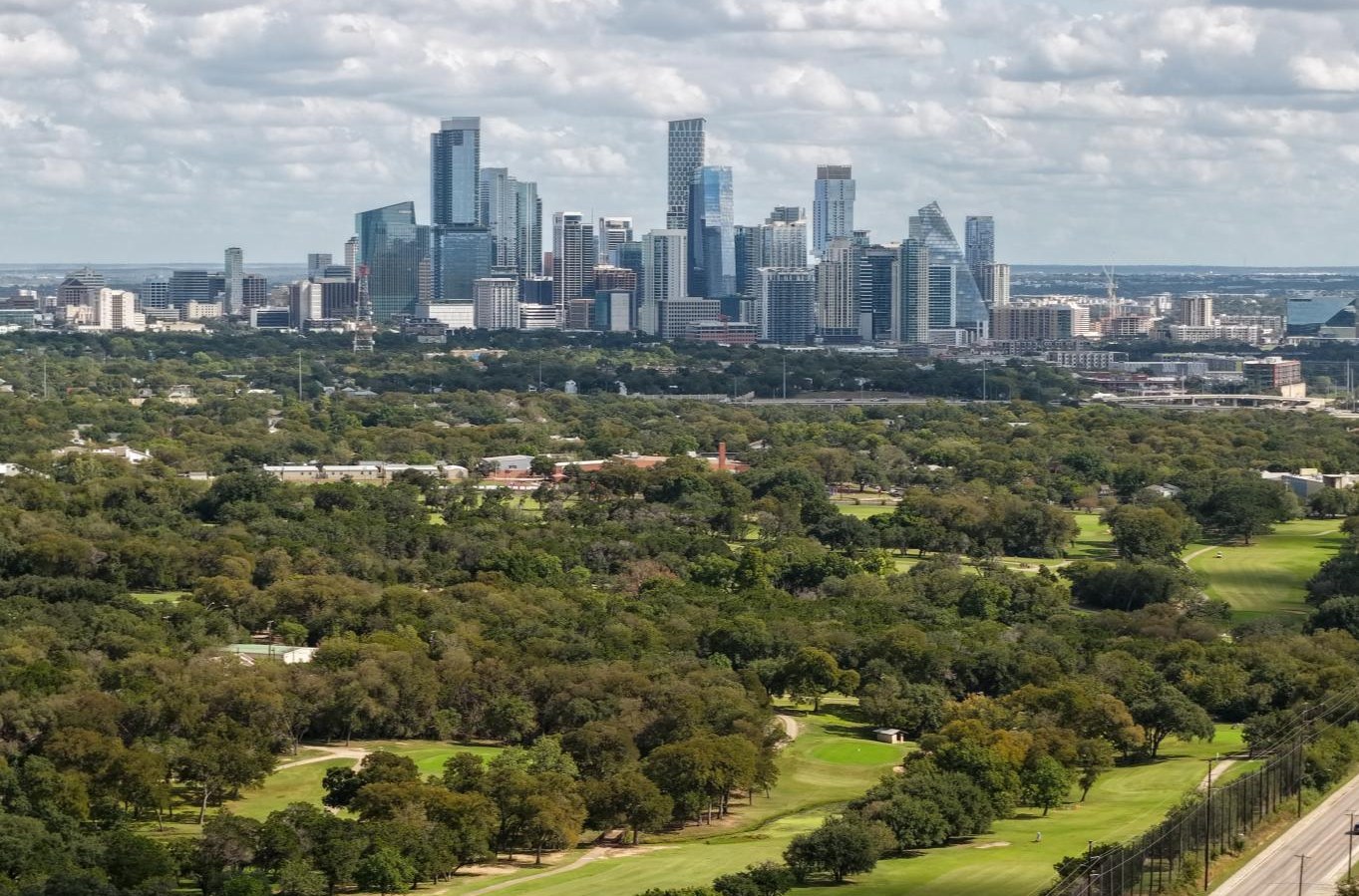
The rules for what can be built on about 190 acres of University of Texas land in West Austin, and whether the city finally owns Lions Municipal Golf Course, come before the Austin City Council on Tuesday for a briefing ahead of a planned Dec. 3 vote.
The Council’s work session starts at 9 a.m. Tuesday, Nov. 17, 2026, at Austin City Hall, 301 W. Second St., according to the work session agenda. Some members may take part by videoconference. The briefing is listed as Item B1, with Assistant City Manager Eric Johnson and Trish Link, a division chief in the City Attorney’s Office, presenting. No vote is posted on the item.
The city’s briefing slides list Dec. 3 as the date for Council action on the amended agreement, and say UT’s Board of Regents will take it up separately, tentatively in December 2026. City staff had said in October they would bring the agreement to Council on Nov. 19, The Dispatch reported; the Nov. 19 agenda does not include it.
Item B1: The Brackenridge agreement and Muny. The city and UT want to amend the 1989 Brackenridge Development Agreement, an interlocal agreement approved by the Council, UT regents and the Legislature that sets development rules for UT land along Lake Austin Boulevard for projects that are not for university purposes. According to the slides, George W. Brackenridge gave UT about 500 acres along the Colorado River in 1910, and the area today covers about 350 acres, including the golf course, UT student housing, the Brackenridge Field Laboratory, a youth sports complex and commercial buildings. Muny, as the golf course is known, sits on 141 acres of UT-owned land. The city has operated it since 1936 or 1937 under a lease that has been on a month-to-month basis since May 2020, the slides say. The slides call Muny the city’s most-used public course, with 75,000 rounds a year.
What each side gives. Under the slides and term sheet, UT would transfer Muny to the city for golf course purposes. In exchange, the city would:
- Vacate city rights-of-way listed in Exhibit B, including stretches of 20th, 21st, 24th and 25th streets, Comal, Trinity and Red River streets and part of Manor Road near campus, if that is feasible, public safety can be maintained and UT pays to move utilities. The term sheet says compensation for the rights-of-way “is captured within this transaction.”
- Amend UT’s lease at Mueller to adjust timelines and allow residential uses, child care and other uses that serve UT students, staff or faculty.
- Allow more development on the Brackenridge land than the 1989 agreement does.
- Consider creating a tax increment reinvestment zone, or TIRZ, a district where growth in property tax revenue is set aside to pay for public improvements in that area, plus a local government corporation. The term sheet says the TIRZ would comply with the city’s TIRZ affordable housing policy but would not require affordable housing within the TIRZ area.
A private donor would give money to UT “for the sole purpose of transferring Muny to the City for golf course purposes,” the slides say. UT would also replace the Brackenridge Apartments, affordable graduate student housing on Lake Austin Boulevard, though the term sheet says not necessarily within the agreement area.
How much could be built. The term sheet covers 190.26 acres. The main changes from the 1989 agreement:
- Floor-area ratio, the ratio of building floor space to land area, rises from 0.4 or 0.45 to 1 to 0.6 to 1 across the whole area. The slides put the total at 4.9 million square feet, compared with 1.7 million now. A single site could go up to 5 to 1 unless Council approves more through a rezoning.
- Buildings along and north of Lake Austin Boulevard could reach 65 feet; buildings south of the boulevard but not along it could reach 105 feet.
- Impervious cover, such as roofs and pavement, is capped at 75% across the area and 85% per site, or 45% for single-family homes, and can be shifted between sites. Building coverage rises from 50% to 75% per site.
- The 22-units-per-acre cap on apartments is dropped.
- The 200-foot setback from Lady Bird Lake stays. New elements include setbacks along minor waterways, heritage tree requirements based on city rules and UT policy, city drainage and water-quality code, and an assessment of critical environmental features south of the boulevard, with buffers to be worked out.
The slides say the current agreement makes the city pay for public infrastructure, while the proposed TIRZ “allows UT development on the site to pay for infrastructure.” The backup does not include a TIRZ financing estimate; the slides list a preliminary project and financing plan as a spring 2027 step.
What the Environmental Commission asked for. The commission voted 11-0 on Nov. 4 to recommend that Council delay its vote on the amended agreement until June 2027, according to its written recommendation. The commission cited the field laboratory’s 60th anniversary in April 2027, public engagement and a full environmental study. It also asked Council to require UT to keep all 82 acres of the field lab “in perpetuity,” set a 300-foot setback from the lake with no impervious cover in it, cap building height at 75 feet, and limit impervious cover to 67% per parcel and 70% overall, with no transfers between parcels. Those limits are tighter than the term sheet’s.
What comes after Dec. 3. The slides list steps for spring 2027: finalizing the right-of-way vacations, amending the Mueller lease, drafting a regulating plan that reflects the amended agreement, preparing the TIRZ plan, Council votes on the regulating plan and TIRZ, and the transfer of Muny to the city.
Also on the agenda:
- Item E1: A closed session on Austin Energy generation, operation and resources, under the state exemption for competitive public power matters.
How to speak. Speakers must register in advance, according to the city’s speaker rules. Online registration for in-person and remote speakers, through the work session sign-up form, closes at noon Monday, Nov. 16. In-person speakers can then register at kiosks in the City Hall atrium until 45 minutes before the meeting starts. Speakers get at least two minutes per item. Agendas and backup are on the Council meetings page.
The Council’s regular meeting follows Thursday, Nov. 19, at 10 a.m. Council action on the Brackenridge agreement is listed for Dec. 3.