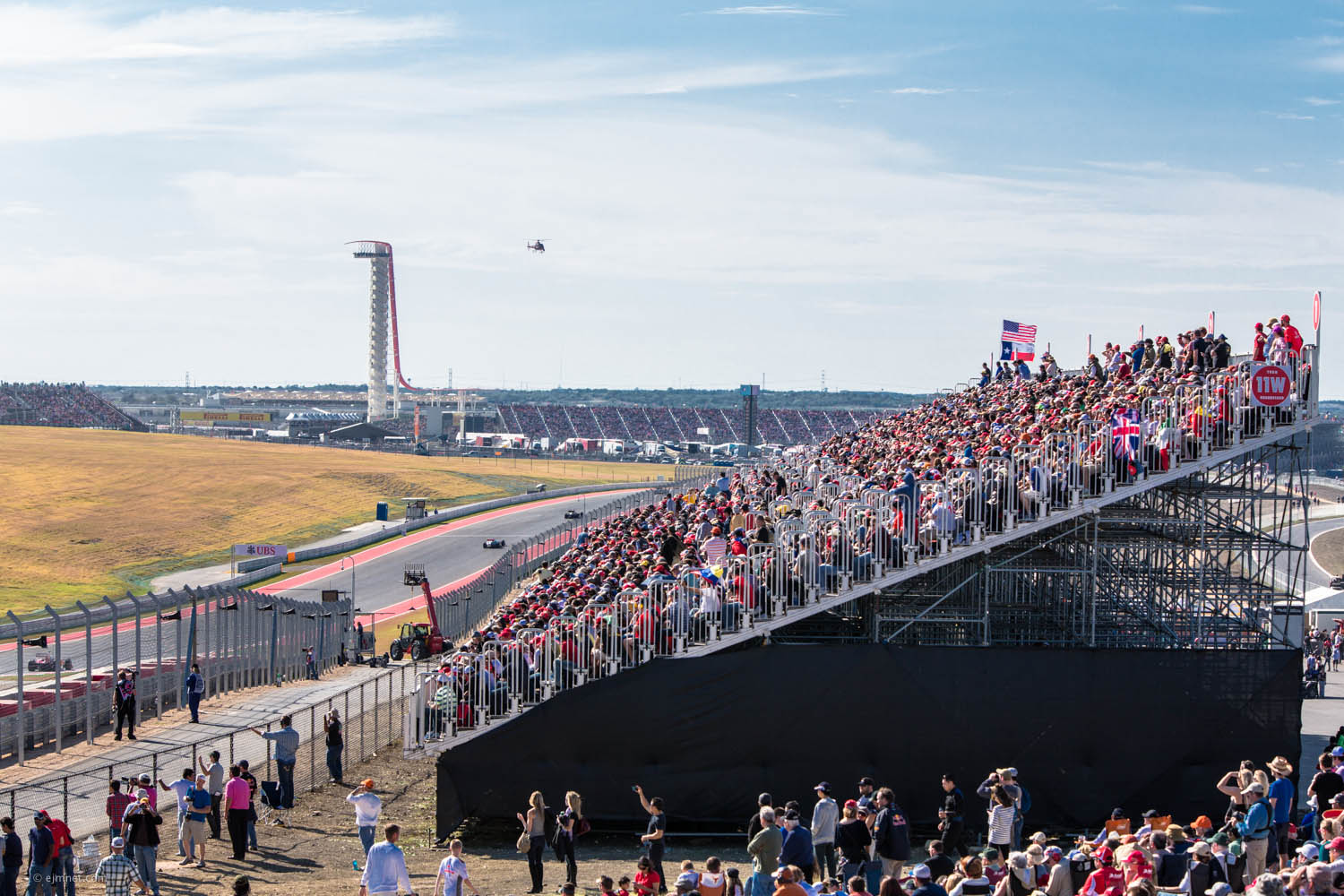
The cars are gone, the fans are flying home, and now comes the traditional Austin postgame: the economic-impact victory lap.
Austin Economic Development’s Oct. 26 release says Formula 1 “puts Austin on the World Stage.” It cites a Visit Austin projection that this year’s race activity could generate more than $1 billion in economic impact, roughly half of it from direct spending, with hotels expected at about 92% to 95% occupancy. The release concedes that final numbers for the Oct. 22-25 race weekend at Circuit of The Americas “will take time to measure.”
“Economic development doesn’t always look like a ribbon cutting or a new office building. Sometimes, you can hear it coming around Turn 1,” said Mac Cummins, the department’s director. To its credit, the release also quotes Cummins acknowledging that “an event of this scale brings traffic, crowds and real disruption for residents, and we shouldn’t minimize that.”
The 2021 numbers, read closely. For a harder number, the city points to the Texas Governor’s Office post-event review of the 2021 U.S. Grand Prix. That report estimated $331.4 million in primary direct spending, including $154.7 million at hotels and motels, and about $30.6 million in extra state tax receipts. Those figures are in the report.
Here’s what the release leaves out. The report says the primary spending figure was “estimated by the OOG based on projected attendance and projected event spending.” It also says that population growth, other events and “crowding out” (locals skipping town or avoiding the crowds) “prevent the OOG from determining the actual amount of incremental tax increases” from the race. And it says the state “makes no assumptions about the accuracy” of the organizer’s attendance estimate.
The $30.6 million in tax receipts wasn’t a bonus that landed in the state’s lap, either. Under the state’s Major Events Reimbursement Program, that projected tax gain is what sizes the race’s trust fund, which reimburses eligible costs of putting on the event. In 2021, the state’s $30.6 million and a $4.9 million local share made up a $35.5 million fund for the race. The applicant was the Circuit Events Local Organizing Committee.
Fewer fans, bigger checks. The Governor’s Office Events Trust Fund award spreadsheet, updated Sept. 30, lists every F1 race at COTA that has used the program. The attendance reported to the state, which the 2021 report describes as average daily attendance, has dropped four years in a row:
- 2021: 136,841
- 2022: 135,859
- 2023: 123,916
- 2024: 121,229
- 2025: 113,157
The money moved the other way. The trust fund was $35.5 million for 2021 and stayed between $38 million and $41 million for each race from 2022 through 2025. The 2025 payment of $40,977,419, received in April 2026, is the largest for any U.S. Grand Prix in the spreadsheet, which goes back to 2015. The nine races listed add up to about $296.3 million. For this year’s race, the organizer’s application estimated 110,320.
Part of the answer is who’s coming. The share of out-of-state fans in the spreadsheet rose from about 51% in 2015 to nearly 73% in 2025. Visitors from out of state pay the hotel and rental-car taxes that drive the formula, a pattern the racing site PaddockIntel also noted.
Those state numbers are a lot smaller than the ones in the city release. It cites F1’s own claim that recent Austin races drew more than 430,000 fans, which is a cumulative count for the whole weekend.
What’s real. None of this means the race is a bust. The airport numbers are harder to argue with. After the 2025 race, Austin-Bergstrom screened 45,048 departing travelers on Monday, a one-day record at the time, according to the city. Before this year’s post-race Monday, the airport projected about 44,584, KXAN reported. We couldn’t find a final count as of Tuesday morning. And F1 has extended its Austin deal through 2034, so the race, and the question of what it’s really worth, isn’t going anywhere.
The release does make one more thing clear: final economic results for 2026 aren’t in yet. If the state’s next post-event report follows the 2021 one, it will come with the same warnings about what can’t be measured.