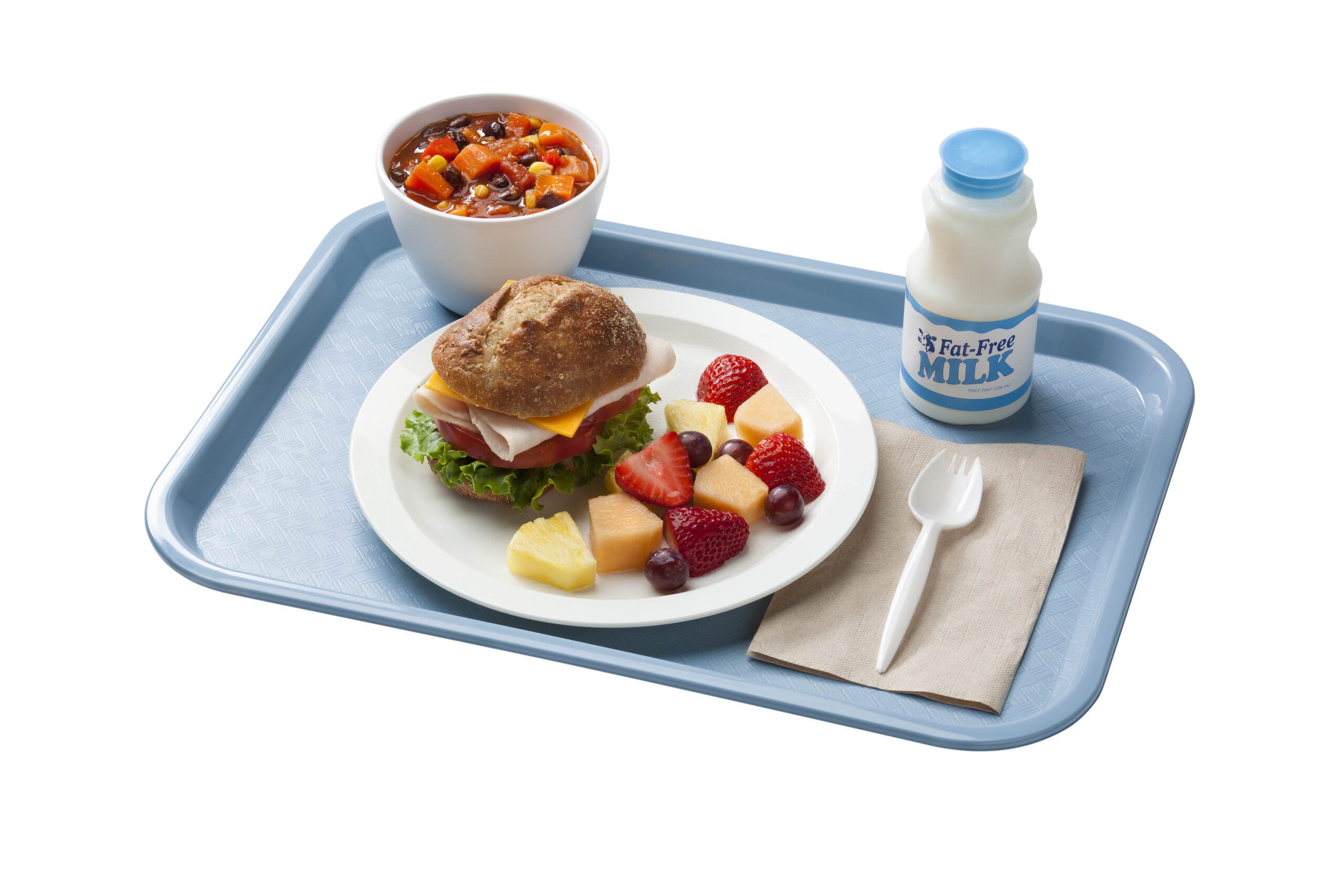
Austin ISD’s school lunch trays now carry a national purchasing award.
The district received “Good Food Leader: Silver” status from the Center for Good Food Purchasing, a Berkeley, California, nonprofit that grades how public institutions buy food. Austin ISD, the City of Austin and the Center celebrated on Oct. 20 at Bowie High School, according to an Oct. 21 city release. The Center announced three Silver districts in its September 2026 newsletter: Austin ISD, District of Columbia Public Schools and San Francisco Unified.
The district had already been sharing the news. Its Sept. 24 sustainability update mentions the recognition. The same update notes that every order of queso and chips at Kerbey Lane Cafe helps pay off negative student meal balances.
What Silver means. The Good Food Purchasing Program scores an institution’s food buying in five areas: local economies, environmental sustainability, valued workforce, animal welfare, and nutrition. According to the release, a Silver institution has completed an assessment of its purchases, committed to the program’s reporting requirements and to improving over time, and written an action plan aimed at reaching Gold.
The numbers. According to the release, the assessment of 2024-25 purchasing data found:
- 18.4% of the district’s food spending went to food that supports local and community-based economies, about $2.6 million.
- The district met the program’s nutrition checklist target. That reflects work on fruits, vegetables, whole grains and minimally processed foods, nutrition education, and pushing vendors toward lower-sugar versions of products.
By our math, $2.6 million at 18.4% puts the district’s total food spending at roughly $14 million. That’s about two-thirds of what D.C. Public Schools spent. The Center says D.C. sent $3.4 million, or 16.3% of a $21.1 million food budget, to qualifying local vendors and met four of the five value categories. The Austin release doesn’t say how the district scored on labor, environmental or animal-welfare standards.
According to the district, its food service department serves about 65,000 meals a day and more than 10 million a year, with more than 500 employees working in 105 kitchens.
The people involved. “We are proud to earn Good Food Leader: Silver status to show that school meals can do far more than just nourish students,” Caroline Juarez, Austin ISD’s purchasing coordinator, said in the release.
Zach Baumer, director of Austin Climate Action and Resilience, said in the release that the district’s approach “helps keep more food dollars in our region, strengthen local supply chains, and build a more resilient and sustainable food system.”
Bella Steinhauer, a senior analyst at the Center, called the Silver status “well earned” and said it came in the district’s eighth assessment.
The city’s role. The city has been involved in this program for years. A Center case study of the Austin area’s work from 2016 through 2023 says the city’s sustainability office has brought local institutions together around the program since 2016. The office signed a contract with the Center in 2017 and has paid for assessments of Austin ISD, the Austin Convention Center and UT Austin dining. The same document lists UT and the Convention Center as inactive. Lake Travis ISD is still in the program; its local purchasing rose from 14.8% to 16.2% over its first two assessments.
Austin ISD says it was the first Texas school district to adopt the program, in 2019. The release says reaching Silver is one of the values-based purchasing strategies in the Austin/Travis County Food Plan adopted in 2024. The plan’s institutions page has the related goals.
The next step on paper is Gold. The release doesn’t say when the district expects to get there.