This article is enhanced by Local Insights Pro.
By The Austin Dispatch Top Issues Desk
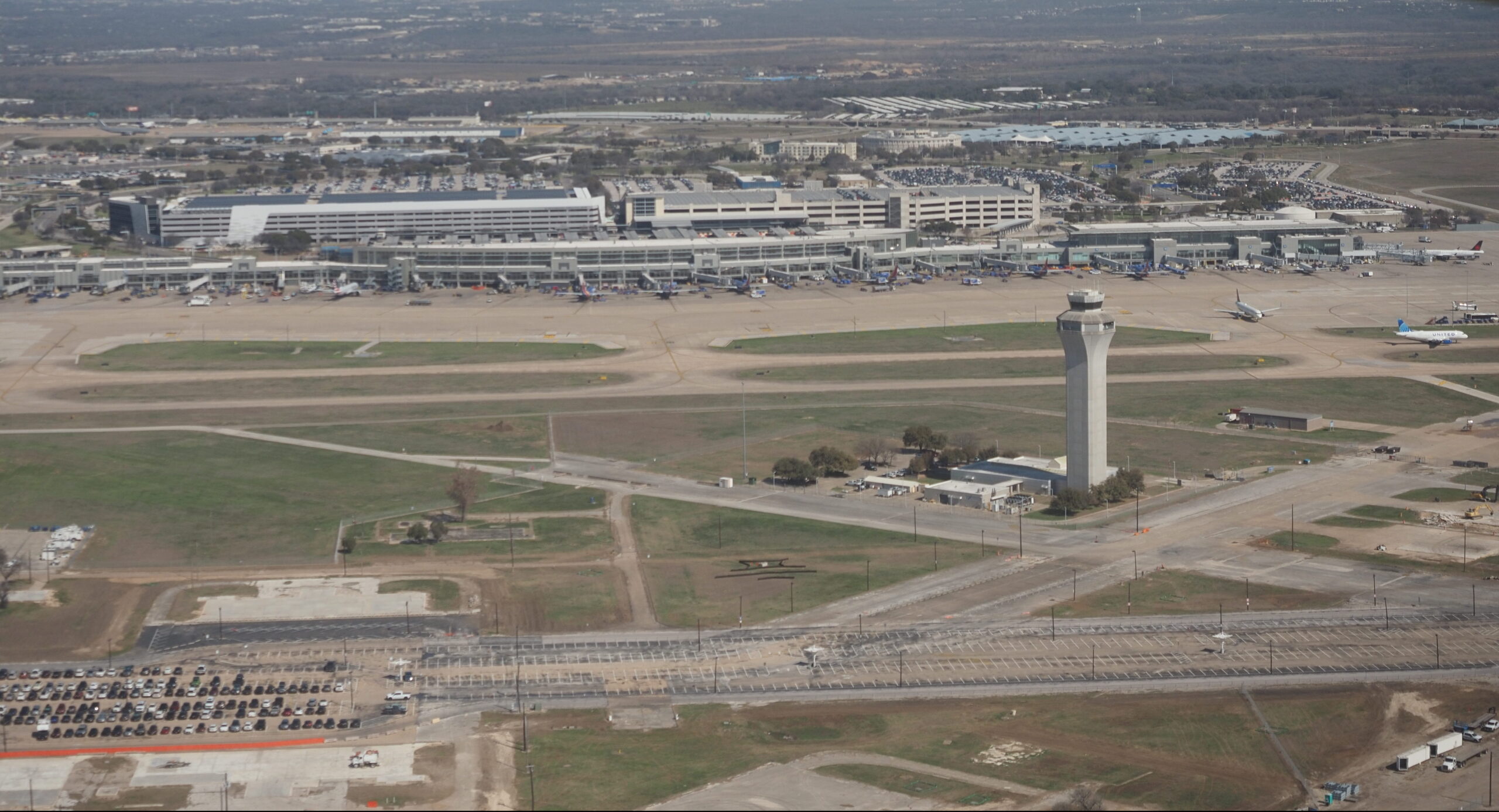
The Austin Transit Partnership will spend nine to 12 months planning a light rail extension to the airport, its staff told the board Nov. 10.
The Nov. 10 memo to the ATP board describes a line of about 3 miles, mostly elevated, from the planned Yellow Jacket Station on East Riverside Drive to one station at Austin-Bergstrom International Airport. It would add to a 9.8-mile first phase that ATP’s own January 2025 plan of finance puts at $6.8 billion to $7.1 billion, plus about $1.1 billion in financing costs. The memo carries no cost estimate for the extension.
The airport is the stop Austin keeps asking for. Voters approved a 2020 transit plan that reached the airport, and officials later cut that leg from the first phase as costs rose, Axios Austin and KVUE reported. ATP’s May 2023 Light Rail Implementation Plan kept the airport only as a “priority extension,” according to the memo.
The short version: ATP is starting a federal environmental review and a cost study for a train to the airport before it has broken ground on the first line, before Washington has awarded the grant that line depends on, and without a price tag. The question for Austinites is whether this is planning or a promise.
The ATP board meets next on Wednesday, Nov. 18, at 2 p.m. at 203 Colorado St., according to ATP’s events calendar. The agenda had not been posted as of Wednesday morning.
What the memo says. The memo is signed by Jennifer Pyne, ATP’s executive vice president for planning, community and federal programs, and Lindsay Wood, executive vice president for design and construction. It makes the public-demand case in one line: “During the NEPA process for Austin Light Rail Phase 1, the number one comment we received from Austinites was to extend light rail to the airport.” NEPA is the National Environmental Policy Act, the federal review a project needs before it can get federal money.
The staff case for moving now is timing at the airport. The memo says the airport is designing a new Arrivals and Departures Hall, that a future rail station should be integrated into that design, and that the planning has to happen now “in order to future-proof this extension and station.” It also says ATP will coordinate with the airport and the Texas Department of Transportation on planned work along State Highway 71.
The memo lists three tasks:
- Design coordination with the airport, described as ongoing.
- A new federal environmental review for the extension. The memo says the Federal Transit Administration agreed to a streamlined process, an Environmental Assessment, rather than the longer environmental impact statement the first phase required.
- A cost estimate and a funding analysis. The memo says all of this planning will take about nine to 12 months, with updates to the board along the way.
The money is the whole story. Mayor , who is vice chair of the ATP board, announced the planning in his Nov. 10 newsletter. “My challenge to ATP is to pursue this extension within our existing budget approved by voters — no new taxpayer dollars,” he wrote, according to Axios Austin. Wood told KVUE, “We are seeking no new taxpayer dollars.”
ATP’s own finance documents show how tight that budget already is. In the January 2025 plan of finance, Proposition A, the property-tax revenue Austin voters dedicated to the transit plan in 2020, pays for about $1.8 billion to $1.9 billion of the first phase in cash. Prop A revenue also backs a federal TIFIA loan, a low-interest federal transportation loan, of $1.0 billion to $1.1 billion and contract revenue bonds of $0.58 billion to $0.61 billion.
Add those up and local Prop A money carries or secures roughly $3.4 billion to $3.6 billion of the $6.8 billion to $7.1 billion phase. Federal grants are expected to cover the rest, $3.4 billion to $3.6 billion, or about 49.4% of capital costs, according to the same document.
That federal half is not in hand. The federal government has not yet awarded the roughly $4.1 billion grant ATP is seeking; the FTA’s current estimate is summer 2027, KXAN reported in October. The FTA gave the project a “Medium-High” rating, ATP says, which is a ranking, not a check. The roughly $1.1 billion in financing costs ATP lists separately comes on top of the capital figure, and the plan of finance says those costs are eligible for federal reimbursement too.
The document against the announcement. Watson and Wood say no new taxpayer dollars. The memo does not say that. It says the planning work will “analyze the timing/schedule of when this extension could be covered by ATP’s Proposition A contract revenue budget,” and will look for other money, “including potential federal funding support.”
That is a schedule question, not a promise of a near-term line. Prop A is a dedicated slice of city property-tax revenue, and the plan of finance shows the first phase already claiming it through construction, which ATP’s finance document puts at 2027 to 2033, plus years of loan and bond repayment after that. An extension paid from that same stream either waits its turn or finds new federal money.
There is one more place the money could come from. The 2025 plan of finance says the first phase carries about 32% contingency, and that any contingency left at the end “could be used to either enhance project elements or be put toward an extension of the system.” That money exists only if a nearly 10-mile urban rail project finishes under budget. We have not found an ATP document that estimates how much would be left.
The memo also includes no ridership estimate for an airport station and no estimate of what the Highway 71 work would cost or who would pay for it.
What else is still in the way. ATP’s release says the first phase is still in pre-construction, and the memo describes “early works construction in 2027.” Lawsuits over the project’s financing are still pending, KXAN reported in October. On the memo’s timeline, the airport study would wrap up between August and November 2027, the same year first-phase early construction is set to begin.
What’s unresolved. Three numbers would tell Austinites what this extension really means: its cost, how many years it would wait for Prop A money, and how many riders it would carry. The memo says the cost and schedule will come out of the study. The people who could answer sooner are ATP’s financial staff, including Bryan Rivera, executive vice president for financial services, who is copied on the memo. The memo does not say whether any of those figures will be ready before the board meets Nov. 18.
What happens next. The ATP Board of Directors meets Wednesday, Nov. 18, at 2 p.m. in the ATP Board Room, 203 Colorado St. ATP says the agenda and supporting documents will be posted closer to the meeting, and the meeting streams on ATP’s video archive. ATP’s Community Advisory Committee meets Thursday, Nov. 12, from 5 to 7 p.m. at the same office, in person and online. ATP says it will update the board during the 9-to-12-month planning period; the memo sets no date for a cost estimate.
Sources: ATP news release, Nov. 10, 2026; ATP board memo, Nov. 10, 2026; ATP plan of finance FAQ, January 2025; ATP events calendar. Reporting from Axios Austin, KVUE and KXAN is credited where used.