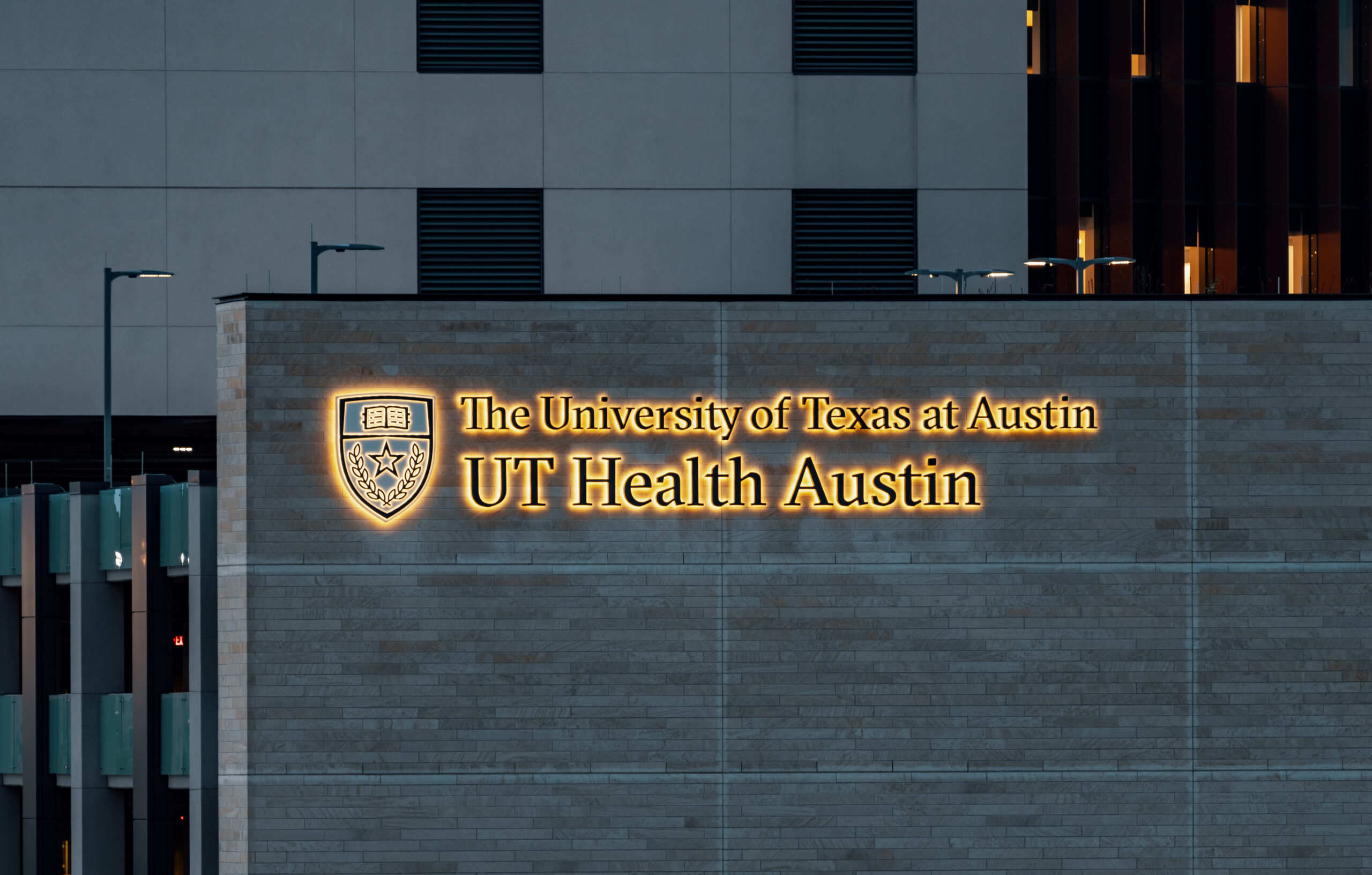
The University of Texas at Austin gave its top doctor a bigger title Wednesday, and a bigger job to match.
The news: UT named Claudia F. Lucchinetti, M.D., executive vice president for medical affairs and the UT Dell Medicine health system. According to the university, she will remain dean of Dell Medical School and lead UT’s medical enterprise. Before the change, her Dell Med directory profile listed her as senior vice president for medical affairs, so the move takes her from SVP to EVP. The announcement doesn’t mention any change in pay.
“Dr. Lucchinetti is the right person to establish UT Austin as a global leader in academic medicine,” UT President Jim Davis said in the release. He called elevating her role “a crucial step in building a world-class health system for Texas and beyond.”
Lucchinetti is a neurologist and multiple sclerosis researcher. She came to Austin in 2022 after nearly three decades at Mayo Clinic, where UT says she chaired the neurology department and served as dean of clinical and translational science. “Our ambition is to set a new standard for academic medicine,” she said in the release.
Why it matters here: The promotion puts Lucchinetti over UT’s clinical buildout as it gets much bigger and more expensive. The centerpiece is UT Dell Medical Center, which the university says will open in 2030. In August, UT System regents approved a $1 billion first phase covering early work and site preparation. The money comes from system bonds to be repaid from clinical revenues, with about $56 million a year in debt service. According to the regents’ agenda, the project’s estimated total cost rose from $2.9 billion to $5 billion in June 2025. The site later moved to the former Pickle Research Campus in North Austin. Community Impact reports the complex is planned for 300 to 500 beds and will be built with UT MD Anderson Cancer Center.
Travis County has skin in this game too. Since voters approved the 2012 Proposition 1 tax increase, Central Health, the county’s health care district, has invested $35 million a year in Dell Med, a figure Central Health repeated in its Sept. 28 annual update. That partnership is pitched as a way to expand specialty care for low-income residents. Each year it gets judged on how many Medical Access Program (MAP) and Medicaid patients actually get seen.
What to watch: UT’s announcement lays out the vision. It doesn’t explain how the new flagship hospital will serve the county’s uninsured patients, or how Central Health’s dollars fit into the new “health system” structure. It also doesn’t say what Lucchinetti’s expanded authority covers beyond her current role. Those are fair questions for the Central Health Board of Managers and the regents as the hospital’s later phases come up for approval.