Austin now sends its own emergency alerts to phones in the city and has new rules for telling council members when a major incident happens. Officials described those changes to the City Council’s Public Safety Committee on Oct. 5, a year and a half after a propane explosion leveled a home in Northwest Austin.
The committee spent its Oct. 5 meeting on three briefings: the emergency response to the April 2025 house explosion, the city’s new emergency alert system and its wildfire prevention work. Committee Chair José Velásquez, Vice Chair Krista Laine and Council Member Marc Duchen were present.
The explosion response
The house on Double Spur Loop, near U.S. 183 and Spicewood Springs Road, exploded the morning of April 13, 2025. The Travis County fire marshal later said a substantial propane leak inside the home caused the blast, KUT reported. Krista Laine, whose District 6 covers much of Northwest Austin, co-sponsored the briefings with Velásquez.
Interim Fire Chief Tom Vocke said Austin firefighters reached the scene within six minutes and had a full response there within 10, according to the city’s meeting transcript. Some firefighters at nearby stations heard the blast and began responding before the call was dispatched. Dispatchers got reports of several addresses spread over about a mile, he said.
Austin-Travis County EMS Chief Robert Luckritz said medics treated seven people at the scene. Four were taken to hospitals, one of them in critical condition, and three declined care.
Austin Emergency Management Director Jim Redick said the incident happened a few weeks after he started the job. He said there was confusion over where the incident was and who was in charge of it from the emergency operations side. City maps put the site close to the line between Districts 6 and 10, and there was no set way to pass information from the emergency operations center to the city manager’s office and then to council members. Redick said he took responsibility for that.
Redick listed the changes made since:
- Assistant City Manager Ramón Batista has ordered that Austin Emergency Management be told about incidents.
- When the emergency operations center is activated, a council liaison will contact council offices.
- A quick response team can set up a shared Microsoft Teams channel and briefing. The city is also moving to the Veoci emergency response platform. (The meeting transcript renders the platform’s name as “vocke.”)
- The city’s emergency operations plan now includes its partnerships with Williamson and Hays counties.
Laine asked whether the plan includes Round Rock ISD, which had schools in the area. Redick said it would. He said he would work with Williamson County Emergency Management Director Bruce Clements to make sure the district is part of the planning.
Laine asked how residents on a street served by propane would learn whether they should check their own systems. A fire official said Austin requires inspections when propane systems and piping are installed, and Travis County does not have all the same rules. Velásquez asked what else officials knew about the cause. A fire official said investigators confirmed a propane leak but the city has not received the final report. The official said the city has asked for it and will share it. Velásquez said the committee might raise the difference in inspection rules with county commissioners once the report is in.
Alerts on your phone
Austin became an IPAWS alerting authority in September 2025, according to Redick’s presentation. IPAWS is the federal system that sends Wireless Emergency Alerts to phones, along with TV and radio warnings. Counties had that authority before, and the city did not. Austin sent its first IPAWS alert on Jan. 26, 2026, a winter-weather road message for Travis County. On May 17, 2026, it sent two alerts during a mobile shooting spree.
The presentation says 57 dispatch staff from the city and from Travis and Williamson counties have been trained on IPAWS. Agreements to back up one another’s alerts are in progress with Williamson, Hays and Travis counties. Austin ISD hosted a tabletop exercise on July 29 with Austin Emergency Management and Austin police. Alerts go out in 14 languages at AustinTexas.gov/alerts. Residents can also sign up for text and email alerts through Warn Central Texas.
Redick asked residents not to turn off public safety alerts on their phones. He said people who opt out will not get the life-safety messages the city sends through IPAWS.
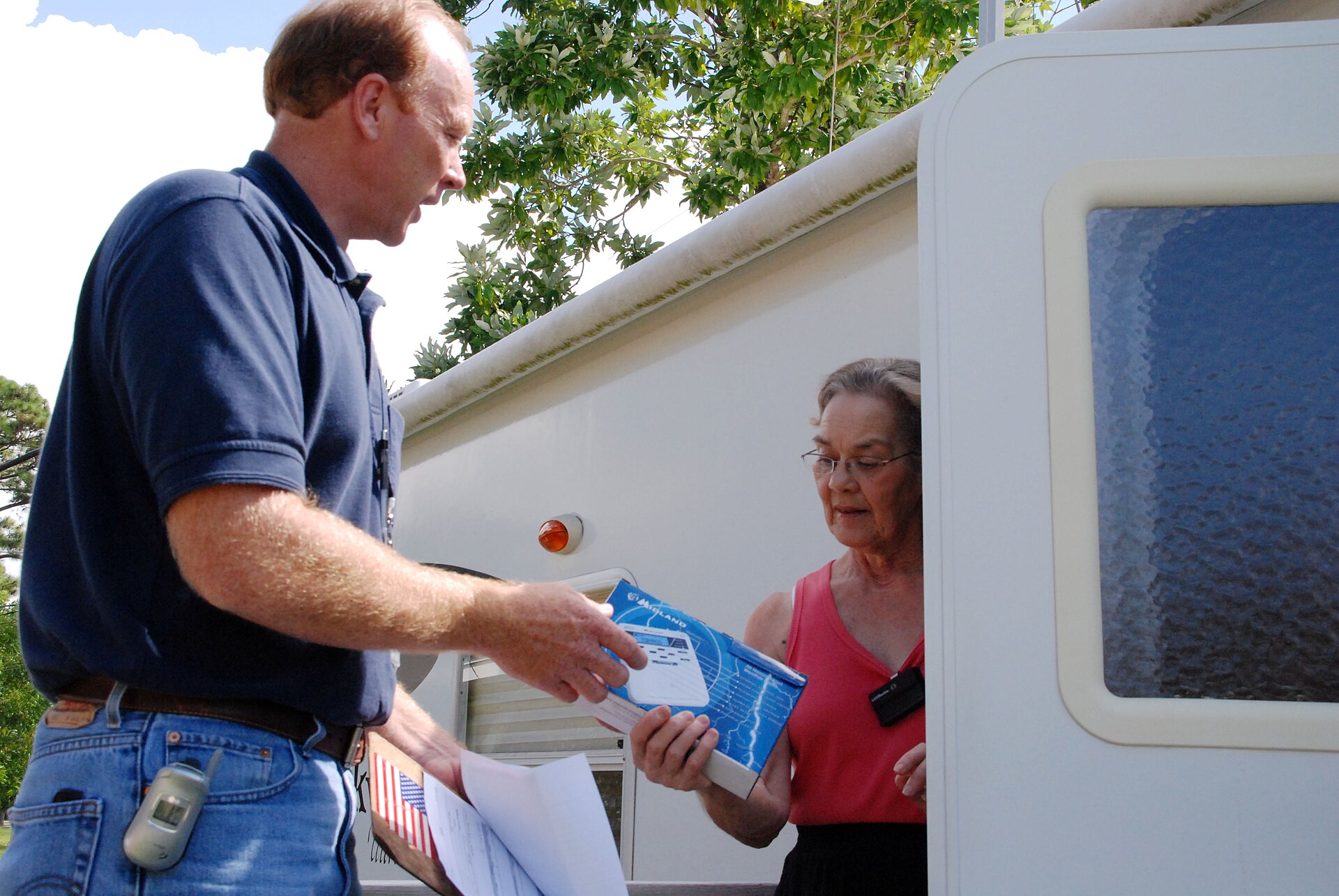
Laine noted that the presentation’s chart of who can request alerts gave fire and EMS just one category, major crashes. She asked why the Fire Department had no others, such as for wildfires. Redick said firefighters have been trained and he expects that to change. Duchen asked about putting alerts on highway message signs and the city’s new downtown kiosks, and about reaching people who lose power or do not have cell phones. Redick said the city gives out free battery-powered weather alert radios while supplies last. He also urged people to heed National Weather Service flash flood warnings, because the city cannot send warnings faster than the weather service does.
Wildfire work
In the third briefing, Vocke and Division Chief David Skowron, who leads the Fire Department’s wildfire division, covered the city’s wildfire program. Vocke said Austin adopted its wildland-urban interface (WUI) building code in April 2020, the first major city outside California to do so, and began enforcing it in January 2021. Updates to the code’s fire protection criteria manual took effect Oct. 1. According to the presentation, in fiscal 2026 the city:
- held 55 community events;
- did 427 structure ignition zone evaluations with partners; and
- tracked $421,000 in fuel-reduction work on more than 56 acres of city parkland.
Austin has 28 Firewise communities, which Skowron said is the most of any city in Texas.
Skowron said the city-county wildfire coalition has finished updating the Community Wildfire Protection Plan. He said the city will hold its first Austin Ember Bash, a family wildfire-awareness event, on Nov. 7 at Virginia Brown Recreation Center, part of an effort to reach more residents on the city’s east side. A class for landscapers and handymen on home-hardening work is scheduled to start Nov. 17.
Duchen asked about insurance discounts for homeowners who harden their homes. Fire officials said they have met with the Texas Department of Insurance several times but cannot promise any benefit. Duchen said the complaint he hears most is about a single neighbor who will not clear brush on a street where everyone else has. A fire official said the city’s property maintenance code is one possible tool, but using it would be slow and limited under Texas law. Laine asked for a public map of Firewise communities. She also asked for measures of whether the programs are reducing risk, not just counts of inspections. Fire officials said the program is just reaching the point where it can start that kind of evaluation.
What’s next
A resolution to adopt the updated Community Wildfire Protection Plan is Item 11 on the City Council’s draft agenda for Oct. 22. Fire officials said they will share the final explosion investigation report with the committee once the city receives it. Video of the meeting is on the city’s archive.