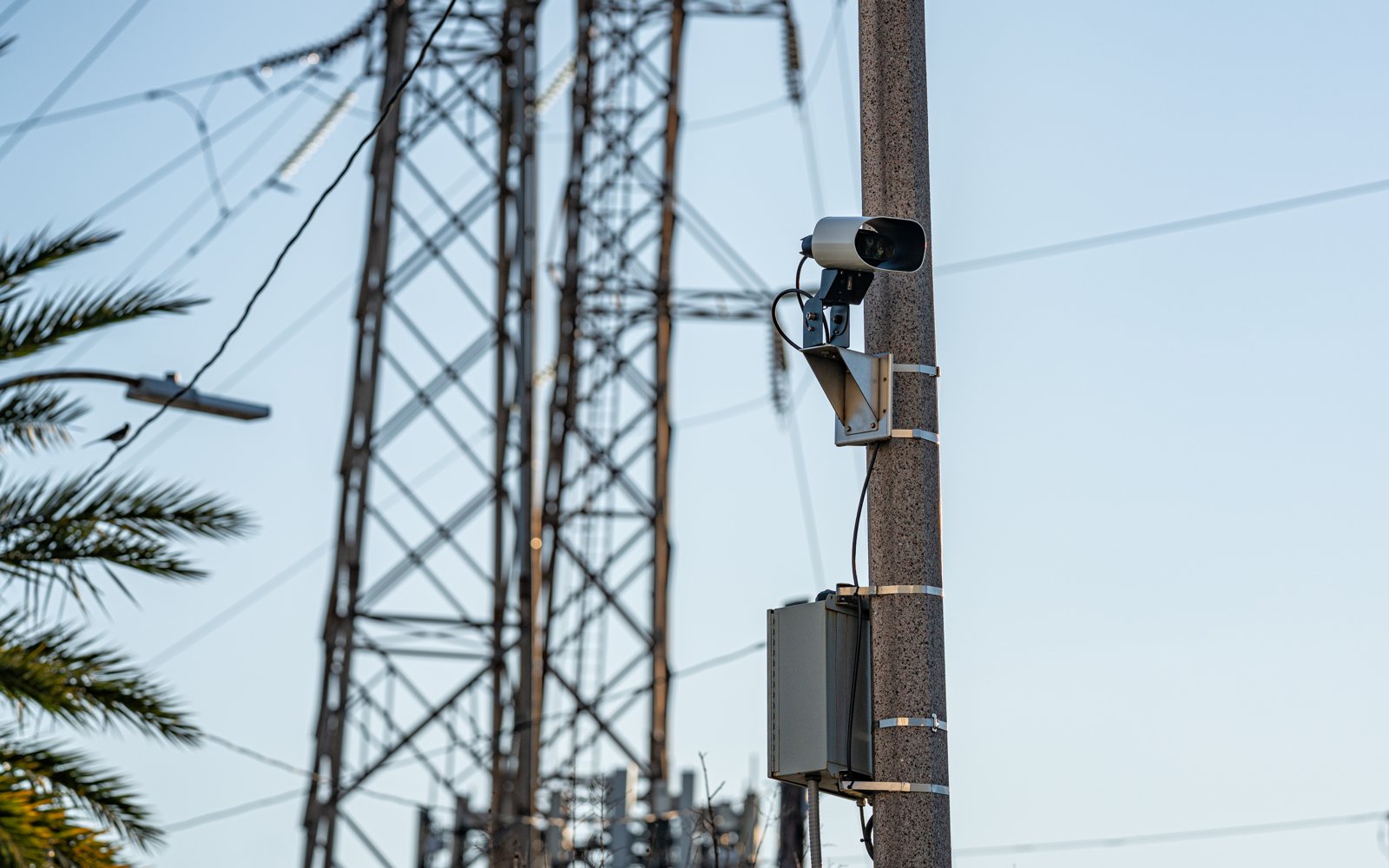
City advisers are set to vote on asking the City Council to stop using automated license plate readers entirely and to keep data on residents’ movements no longer than absolutely needed. The vote comes as nearby cities drop their cameras and Austin weighs plate readers for parking enforcement. A recommendation wouldn’t change any law. Council decides, under the city’s surveillance ordinance.
Preview: City of Austin Technology Commission, regular meeting
Wednesday, Oct. 14, 2026, 6:30 p.m. CT. Austin City Hall, Boards and Commissions Room 1101, 301 W. Second St. Some commissioners may join by video. The meeting airs on ATXN.
The city has posted the agenda (EDIMS 482642), an event page and 2026 meeting documents. Records from the Sept. 9 meeting include its agenda (EDIMS 480318).
What the draft asks (Item 5). The posted draft recommends that Council:
- “Discontinue use of automated license plate readers, or Automatic License Plate Readers (ALPRs), in all of their forms”
- ensure that any future broad surveillance tools are accountable to Austin residents and “do not store data at all beyond absolute need”
Its closing clause asks Council to adopt policies eliminating “mass surveillance tools such as ALPRs, both in static and mobile positions such as within self driving cars.” It also asks for policies that minimize collecting and storing data gathered from residents without consent, especially location data that could reconstruct a person’s movements or daily activities (EDIMS 482954).
The posted text may not be the version voted on. The backup posted for Oct. 14 is word-for-word the draft posted for Sept. 9 (EDIMS 480835). Its file metadata shows it was created Sept. 8. The Sept. 9 meeting transcript shows that commissioners first voted to amend the closing clause. The amendment specified that the policies cover only the city’s own use of these tools. Then they set the item aside without final action so the authors could rework it (video). That amendment does not appear in the posted Oct. 14 backup. Item 7 on this agenda is an update from the Artificial Intelligence working group on “their recent meeting to reconfigure their latest public surveillance recommendation” (agenda). A revised text may be presented at the meeting.
What commissioners said Sept. 9.
- The authors’ case. Commissioner Brian Williams said the goal is a city standard: Austinites should not be surveilled without recourse. If any such technology is used, he said, data should be held only as long as an active investigation needs. Commissioner Kevin Welch is a co-author. He said the draft aims to align with the spirit of the TRUST Act, not just its process. He said Bastrop’s ban on all plate-reader vendors was a model, and he argued against simply switching to another vendor.
- Scope questions. One commissioner asked whether the draft reached private businesses’ cameras. The authors said it is meant to set the city’s own standard. One commissioner noted that state law preempts city regulation of self-driving cars. Another urged naming specific uses the city should avoid, such as camera-based code enforcement, so the advice is actionable.
- Disclosure. During the discussion, one commissioner said they had weighed in during the process that produced the TRUST Act.
Checking the draft’s claims. The draft cites no sources. Here is what published reporting and city records show.
- Austin’s TRUST Act — confirmed. Council adopted the Transparent and Responsible Use of Surveillance Technology (TRUST) Act on April 23, 2026, as Ordinance 20260423-029, creating City Code Chapter 2-19 (executed ordinance, EDIMS 473428; RCA, EDIMS 471680). It requires:
- a privacy impact assessment and a surveillance use policy
- Council approval before departments acquire new surveillance technology, including plate readers, or enter related data-sharing deals
- approved policies for existing tools within 270 days
A city summary says Council Members Vela and Siegel led it. The ordinance doesn’t ban plate readers. It sets a review process.
- Austin ended its ALPR contract — confirmed. The city halted its contract with Flock Safety in June 2025 (Community Impact; KUT).
- Austin police no longer have direct access to Flock’s searchable database. But the Texas Department of Public Safety shares some Flock data with APD on a case-by-case basis in joint investigations, KUT reported.
- Pflugerville — supported by reporting. On Aug. 25, Pflugerville City Council voted unanimously not to renew its Flock lease (Community Impact).
- The city said it found an issue that let nonpartner law enforcement agencies access its data. A resident’s open-records review counted almost 1.6 million outside searches from Feb. 16 to Aug. 15.
- Flock said Pflugerville had statewide sharing turned on since 2024. Flock also said two out-of-state agencies had been mistakenly categorized as Texas agencies, an error it said it had corrected.
- KUT reported that Pflugerville shared data with more than 400 agencies but had formal agreements with only 83.
- Manor, Leander and Bastrop — the drops are confirmed, but the stated reasons differ from the draft’s. The draft says these cities discontinued their ALPR programs because the public raised concerns about privacy and “improper data access.” Reporting confirms each dropped Flock in early September. It does not show improper access to any of those three cities’ own data.
- Manor: Police ended their Flock program effective Sept. 3. The department said it values community trust more than the cameras (CBS Austin). Chief Ryan Phipps told KUT that officers kept having to explain other agencies’ misuse of the system.
- Leander: After a Sept. 3 hearing where nearly all speakers raised privacy concerns, the council had staff suspend the 14 cameras, and the city said it will stop funding the contract (Community Impact). The police chief had described audits and 30-day data retention.
- Bastrop: Council voted Sept. 8 to end its contract immediately and to bar future plate-reader and vehicle-surveillance contracts (Community Impact). The police chief said the department had seen no misuse involving Flock. Residents’ privacy concerns drove the decision.
- Protest-monitoring training — supported by reporting. 404 Media reported Sept. 3 that a Flock webinar showed police how to use its platform during “No Kings” protests and other events (404 Media).
- Test data mixed with real data — not verified. The draft says test data used alongside real data led to dangerous, mistaken conclusions. It names no incident. Dispatch did not find published reporting matching this description.
- Self-driving vehicles and long-term storage — the draft’s assertions. The draft asserts that some self-driving vehicles conduct surveillance not accountable to the public, and that data is routinely stored at length or permanently. It cites no source for either. The Leander retention policy above is one counterexample on storage.
Wider context. KUT reported that Gov. Greg Abbott paused state funding for new Flock cameras in late August. It also reported that several Central Texas agencies, including Round Rock, Cedar Park, Kyle and Hutto police, still use them (KUT).
- Inside City Hall, Austin Transportation and Public Works is exploring plate-reading cameras for parking enforcement under a curb management plan. The department said it would go through the TRUST Act process first (CBS Austin).
- The Public Safety Commission has postponed its own surveillance recommendation while it waits for a report on what technology Austin police use and whether it complies with the TRUST Act, the same report said.
Other items.
- Grant for Technology Opportunities Program (Item 4). Staff ask for feedback and approval of the GTOPs 2027 action plan from Austin Economic Development’s Community Technology Division (EDIMS 482952).
- The Capacity pathway goes on indefinite hiatus, leaving Core and Mini grants.
- Core stays at $320,000, eight awards of $40,000.
- Mini adds two awards, for eight $10,000 grants.
- Core focus areas become five mandatory tracks: workplace digital skills, digital creator support, free or low-cost public internet access, device distribution and open-source or public resources.
- Applicants get standard performance measures, and the demographics section is reworked to award priority-population points.
- Grantees who miss their metrics badly would sit out the next cycle.
- The question-and-answer phase is dropped, proof of match becomes mandatory, applications are final when submitted, and an email backup submission route is added.
- The memo’s purpose section refers to the “2026 cycle,” while its title and attachment say 2027.
- Website refresh (Item 2): progress update from the city website team. No slides are posted.
- 2027 town hall (Item 3): planning for a community listening session.
- 2027 schedule (Item 6): meetings on second Wednesdays, with these exceptions: March 3, when GTOPs applications are received; April 14, for GTOPs award recommendations and officer elections; and no December meeting (EDIMS 482953). The commission’s FY 2028 budget recommendations are due by mid-April.
Commissioners: Steven Apodaca, chair; Benjamin Combee, vice chair; Kevin Welch, Brian AM Williams, Carina Alderete, Suzanne Heritage, Thomas Rice, Rachel Frock, Nicholas Eastwood and Milena Pribic.
How to take part. Speak in person, or register to speak by phone by noon Tuesday, Oct. 13, with liaison Dan Martinez at dan.martinez@austintexas.gov or 512-974-3510. Speakers get up to three minutes. The first 10 who sign up by the deadline may address items not on the agenda. Language access requests are due 48 hours ahead.
How the process works. Boards and commissions advise. Council decides. Under the TRUST Act (City Code Chapter 2-19), new surveillance technology or new uses generally need Council approval after a privacy impact assessment and a surveillance use policy. A Technology Commission recommendation would be advice to Council on top of that process.
A New Orleans Police Department automated license plate reader camera, March 2020. Photo by Tony Webster, CC BY 2.0, via Wikimedia Commons.
