Why it matters to you: Travis County is responsible for a landfill that closed in 1982 and still leaks contaminated water. The state is suing the county over it, and the county is trying to take the land from its private owner. This week’s transfer sets aside $5.65 million in local money for lawyers and repairs, and the county’s own budget office says costs could change.
Travis County Commissioners Court, Oct. 6, 2026, Item 18F (consent)
What passed. As part of the 3-0 consent vote, the court approved a request from Transportation and Natural Resources to transfer $5,650,000 from an earmark against the Capital Acquisition Resources (CAR) reserve. The money is for legal expenses and remediation at the closed 290 East Landfill, 9500 E. U.S. 290. Commissioners Jeffrey Travillion and Brigid Shea were absent.
What the backup says. An Oct. 6 memo from Assistant Budget Director Michelle Surka lays out the history:
- The landfill operated from 1968 to 1982 and is the county’s largest closed landfill. It was closed under the rules of the time.
- It has produced large amounts of leachate, the liquid that forms when water passes through buried waste. The memo says that is most likely because the landfill was sited on natural groundwater seepage and storm water gets through its clay cap.
- The Austin Country Flea Market operates on top of the cap, with buildings and an asphalt parking lot.
- The county pumps leachate into Austin’s sewer system to prevent seepage and unauthorized discharges.
The state’s findings. The memo says the Texas Commission on Environmental Quality issued a notice of violation on March 22, 2024. It cited:
- subsidence, ponding and erosion in the flea market’s parking lot and access road
- trees potentially penetrating the cap
- clogged drainage chutes
- leaks at several leachate extraction wells
Repair plan and estimated costs. The county has finished Phase I of its remediation plan, and a Phase II independent assessment was recently completed. Estimated fiscal 2027 costs, developed before Phase II was done and likely to change, include:
- $2.4 million to $4.8 million for engineering, design and quality control for cap repair and drainage
- $150,000 for extraction system repairs and $250,000 for extraction system maintenance
- $350,000 to $450,000 for demolition on the property
A Sept. 18 memo from Transportation and Natural Resources County Executive Cynthia McDonald says the County Attorney’s Office needs funds “to proceed with legal expenses associated with the condemnation efforts of the landfill.”
Possible borrowing. The budget office recommended moving the full $5.65 million now. It also recommended adding the amount to the county’s fiscal 2027 certificates of obligation project list and issuing a reimbursement resolution, so the county could later borrow to repay itself. The final decision on borrowing would come before the spring debt sale.
Background from published reporting.
- The Texas attorney general sued Travis County on TCEQ’s behalf in May 2025. The suit alleges the county failed to meet post-closure requirements and allowed leachate to reach a creek, according to the state’s petition published by Spectrum News.
- Spectrum News reported in October 2025 on the dispute with the property’s owner. The owner wants to redevelop the site.
- Texas Scorecard, a conservative advocacy outlet, reported in July on the case and the condemnation:
- Moo Moo Meadows LLC bought the land in February 2024. Corbin Graham of Graham Development Corp. is its asset manager.
- The county filed to condemn the property in December 2025.
- At an April 30 condemnation hearing, compensation was set at about $5.5 million. The owners are challenging that award.
- The county and the state both opposed the owners’ bid to join the state lawsuit.
We have not independently confirmed the condemnation award amount in county records.
The two sides.
- The county says it must repair the cap and drainage under its landfill permit and the state’s enforcement. In court filings described by Texas Scorecard, it said the owner limited access needed for remediation.
- The owner says the county has blocked private redevelopment, including a 2023 offer to remediate the site without taxpayer reimbursement, which commissioners rejected, according to the same report.
What to watch
- How much of the $5.65 million goes to lawyers versus physical repairs, and will the county report spending as the work proceeds?
- What does the completed Phase II assessment recommend, and what will the full remediation cost?
- Will the flea market keep operating on the cap during repairs?
- Will the court vote to borrow for this work through certificates of obligation, which don’t require voter approval?
- How does the county’s condemnation case affect the state lawsuit’s timeline and any penalties?
Reference numbers: Item 18F; Surka memo Oct. 6, 2026; McDonald memo Sept. 18, 2026; budget document 400042516; TCEQ notice of violation March 22, 2024.
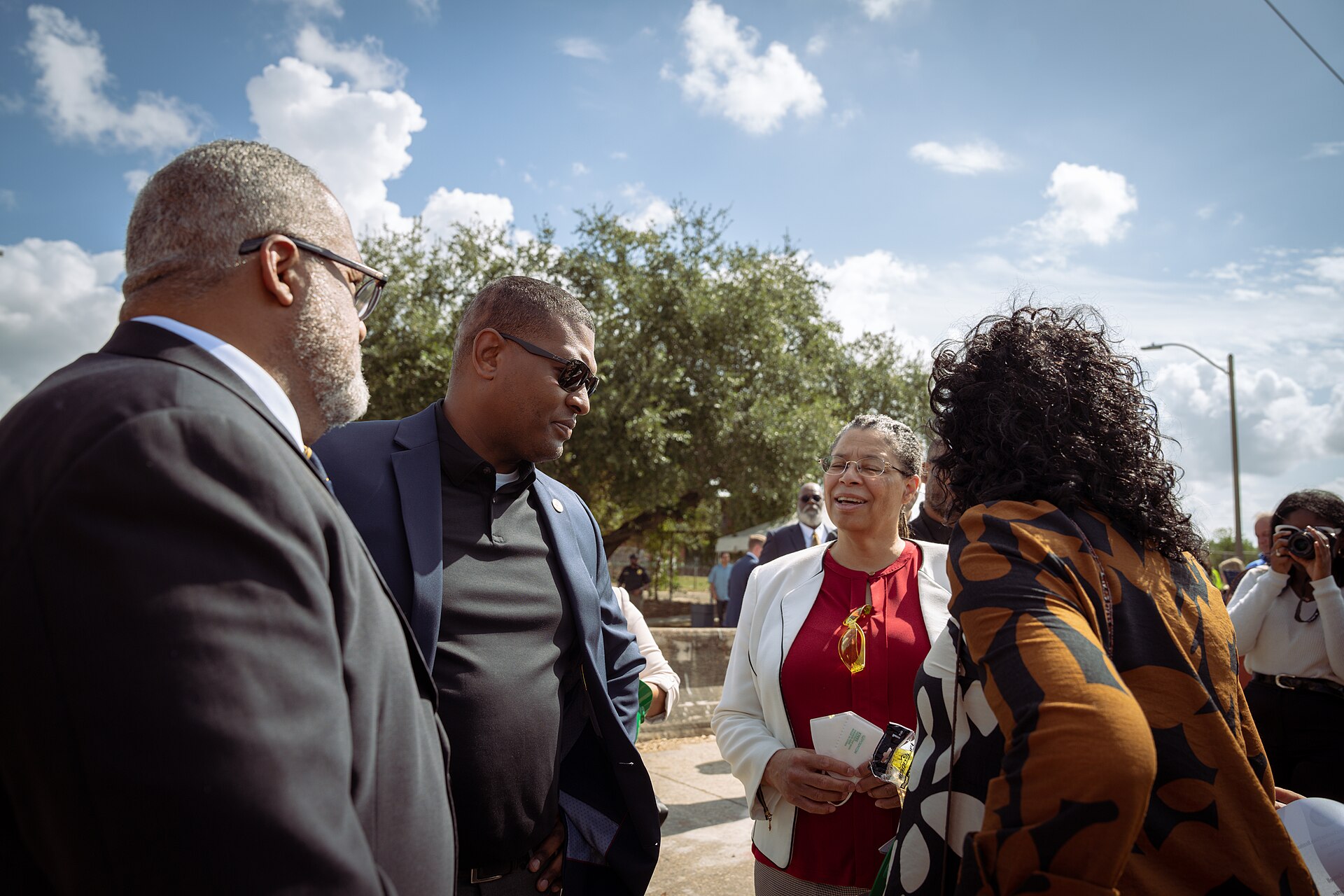
U.S. EPA officials at the former Agriculture Street Landfill Superfund site in New Orleans in October 2024. That site is not connected to Travis County’s landfill. EPA photo, public domain, via Wikimedia Commons.
