UT Austin’s rebuilt general-education requirements now have a college of their own.
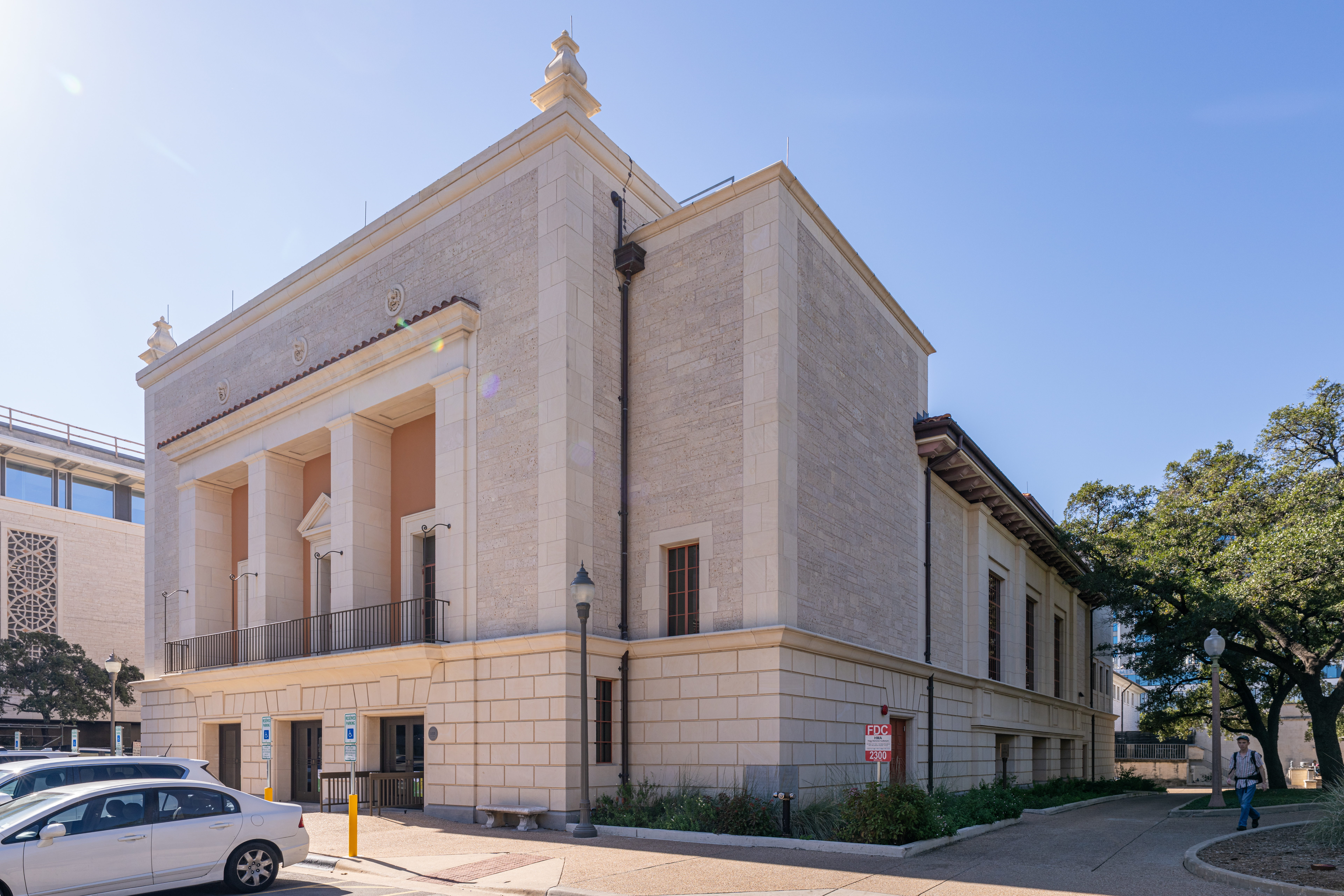
In his annual State of the University address on Oct. 21 at Hogg Memorial Auditorium, President Jim Davis announced a new University College to be the “guardian” of the redesigned Core Curriculum. Its first dean is Devin Stauffer, a government professor who chaired the Core Curriculum Task Force that wrote the new core. So the professor who led the design will now run it.
According to Davis’ prepared remarks, the college “will have the governance, the authority, and the funding to deliver and sustain an outstanding Core,” with faculty committees for each of the core’s three pillars: arts and humanities, social sciences and STEM. The remarks give no dollar figure.
The core, briefly. According to BurntXOrange and Inside Higher Ed, the new core cuts general-education requirements from 42 credit hours to 36. It adds requirements in Western civilization, “Great Questions of Human Life,” principles of American politics, world politics and cultures, and computer science and AI, according to the task force report and UT’s August announcement. UT plans to begin piloting new core classes in fall 2027 and have all of them available by fall 2028. It hasn’t said when the new core becomes required, and the Texas Higher Education Coordinating Board still has to sign off. In the speech, Davis said the old core had become “an incoherent collection of more than 1,000 courses.”
The redesign has critics. Inside Higher Ed reported in August that some faculty saw it as Western-centric and the process as top-down. Literature professor Julie Minich told the outlet, “I am quite shocked at the fact that they have not sought any faculty input except for people handpicked by the president.” Stauffer told Inside Higher Ed the world politics and cultures requirement was added to answer the West-centric critique. A Daily Texan opinion column in September made similar arguments. Davis’ prepared remarks didn’t address the criticism directly. They said “there will undoubtedly be questions” and invited faculty to take part.
A lab building nobody owns. Davis also announced plans for a Frontiers of Science building. It would be a universitywide lab for interdisciplinary work in areas such as AI, robotics, automation and quantum science, and wouldn’t belong to any single college. The prepared remarks don’t give a site, cost or timeline. “That building is on our mind now. Let’s put it on our map,” the remarks say.
The hospital pitch. Davis talked up UT Dell Medicine, the integrated health system led by Executive Vice President Claudia Lucchinetti, and the planned UT Dell Medical Center, where Davis said UT MD Anderson’s work will be integrated with UT Dell Med. “One hospital. One team. One patient at a time,” the prepared text says. The project was launched with what UT calls a historic investment from Michael and Susan Dell, who UT says have now given more than $1 billion to the university.
The victory lap. According to the prepared remarks, UT’s annual research spending grew from $1 billion to $1.37 billion and is on track for $1.5 billion this year. UT’s figures reported to the federal Higher Education Research and Development survey show $1.06 billion in fiscal 2023 and $1.14 billion in fiscal 2024; the $1.37 billion is UT’s figure for fiscal 2025. Davis said UT became the top-funded university in the world for the National Science Foundation. The federal survey behind that ranking covers only U.S. universities; it ranked UT No. 1 among them for NSF-funded research spending in fiscal 2024, at $176.4 million. UT also held the top spot in fiscal 2020. Davis also said UT received nearly 12,500 applications last year for 92 open faculty positions, another 1,200 after the core was announced, and more than 500 for the open dean’s job in the College of Liberal Arts. He cited record applications, record enrollment and an improved four-year graduation rate. The application, enrollment and graduation figures are UT’s own; we haven’t independently verified them.
“Texas is on the rise,” Davis said, according to the prepared text. “We are stable. We are flourishing. And we are ready for what’s next.” UT News’ summary of the speech has more. BurntXOrange, the student news site, also covered the speech.
Davis closed by pointing toward Sept. 15, 2033, the 150th anniversary of UT’s opening. That leaves about seven years to turn a college, a building and a hospital from announcements into reality.