The Austin City Council’s Public Health Committee meets at 10 a.m. Wednesday, Nov. 4, at City Hall to hear how the city’s encampment cleanup program performed from May through September.
The program cost $2,260,803.14 from June 8 to Sept. 30, 2026, according to the Homeless Strategies and Operations presentation posted for the meeting. From May 11 to Sept. 30, crews made 2,803 visits to 780 sites, contacted 581 people and connected 171 of them to shelter. Twenty-four percent of cleared sites stayed clear of any return activity.
Those numbers arrive weeks after the Ending Community Homelessness Coalition, the nonprofit that leads Austin and Travis County’s homelessness response system, published its October 2026 State of the System report. It found that the number of people moving into Rapid Re-Housing, short-term rental help meant to get people off the street quickly, fell 36% in 2025, from 706 to 451, as federal pandemic relief money ran out. The number of households led by someone 18 to 24 documented as homeless for the first time rose more than 32%, from 735 in 2024 to 974.
The short version: Austin is spending on clearing camps, and it is adding long-term supportive housing. The middle rung, the short-term help that moves people from a tent or shelter into an apartment, is shrinking, and the coalition’s own data shows young adults arriving faster than before.
The coalition, known as ECHO, put the problem plainly in its report: Rapid Re-Housing providers are still housing the people already enrolled, but “the front door is closing because the budget is shrinking.” The city’s slides say something parallel about cleanup spending: the staff positions that make up most of the cost are already in departments’ budgets, and “these resources cannot be shifted to pay for social services or housing.”
Where the cleanup money goes. Salaries were 71% of the $2.26 million and contractors 23%, according to the presentation. Austin Police ($505,944.66) and Austin Resource Recovery ($502,999.83) were the largest shares, followed by Austin Transportation and Public Works ($457,374.28), Watershed Protection ($389,654.71), Homeless Strategies and Operations ($300,240.84) and Parks and Recreation ($104,588.82). The slides say the cost per site visit fell 39%, to $963.27 from $1,577.55 in the prior reporting period.
The slides say the process was built to comply with Proposition B, the 2021 ballot measure that reinstated Austin’s public camping ban, and Texas Penal Code 48.05, the state camping ban. Over the full May-to-September window, 55 people were cited and five were arrested. Residents filed 3,758 encampment requests through Austin 3-1-1, and the city took an average of 4.05 days to respond.
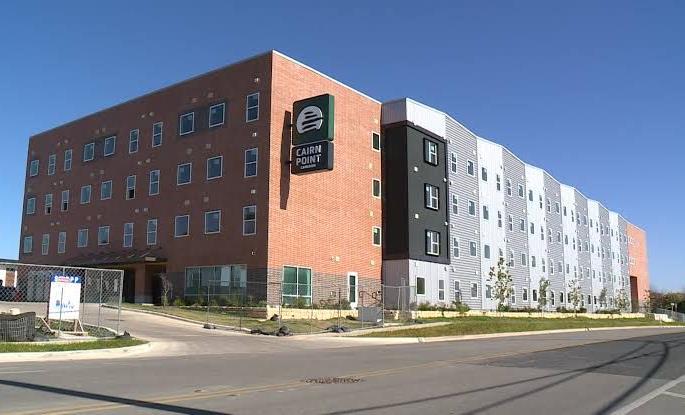
Where housing is growing. Permanent Supportive Housing, long-term housing with case management for people with disabilities or long histories of homelessness, is the part of the system that is expanding. ECHO counted 2,015 such beds in 2025, up 237, and 363 people moved into them, up from 316 in 2024. Counting all permanent housing types, beds rose 15%, from 3,808 to 4,387. The city’s presentation lists two supportive housing communities opened since June with city money, Seabrook Square II with 60 units and Cairn Point Cameron with 100, plus 100 more shelter beds at Esperanza Community.
Where it is shrinking. Rapid Re-Housing beds fell by 153 between 2024 and 2025 as American Rescue Plan Act money ended, and enrollments fell 25%, to 2,432, according to the report. ECHO says the drop does not reflect poorer performance: more than 83% of people leaving Rapid Re-Housing in 2025 left for housing of their own.
Providers stopped taking new people because they could not promise the full 24 months of help the program allows, the report says. ECHO expects further cuts through 2026 because it anticipates HUD’s revised priorities will reduce permanent housing money in the federal Continuum of Care grant competition.
Emergency shelter capacity also dipped, with 10 of 21 shelter programs reporting slightly less inventory in the January 2025 count, the report says.
Who is arriving. Young adults are a growing share of the people the system serves, 8.7% in 2025, up from 7.2% in 2022, according to ECHO. Families with no one older than 24 grew 15%. The report links part of the rise to young people leaving foster care and points to HUD’s Foster Youth to Independence vouchers, which it says the city’s homelessness office has set aside money to use this year.
Overall, the system served 24,792 people in 2025, 7% fewer than in 2024, and 6,895 people were documented as homeless for the first time, a second straight annual decline.
ECHO cautions that some of the overall decline may reflect a data blackout during its switch to new record-keeping software in fall 2025, and the closure of several outreach providers that had been logging contacts. It also says falling Austin rents in 2025, after a wave of new apartments, may have helped.
What the slides don’t say. The city’s presentation counts people “connected” to shelter and services. It does not say how many of the 171 stayed in shelter, moved into housing or returned to camping, and the Dispatch has not found a document that tracks them. It also reports cleanup costs only from June 8, though the outcome counts start May 11.
The presentation does not mention ECHO’s report, youth homelessness or Rapid Re-Housing. Read together, the two documents show a city spending about $2.26 million over 16 weeks on a cleanup program whose budget, by its own account, can’t be moved, while the short-term housing that would give people somewhere to go after a sweep is losing its federal money.
What’s unresolved. The open question is whether the city or Travis County will backfill the Rapid Re-Housing slots lost with the pandemic money, and with what. The committee’s agenda includes a discussion and possible action on a social services strategy, but the posted backup does not name dollar amounts for housing. Homeless Strategies and Operations Director David Gray, who is scheduled to brief the committee, and committee Chair Vanessa Fuentes are the people positioned to answer. The Dispatch did not interview them for this story.
What happens next. The committee meets at 10 a.m. Wednesday, Nov. 4, at Austin City Hall, 301 W. Second St. Public comment is allowed on action items, but briefings like the encampment update are not open for speaker sign-up; instructions are at the city’s Council Committee Information Center. The Dispatch’s meeting preview lists the full agenda, including Central Health board appointments. The slides say the next encampment data release, covering the first quarter of fiscal 2027, is scheduled for early 2027.