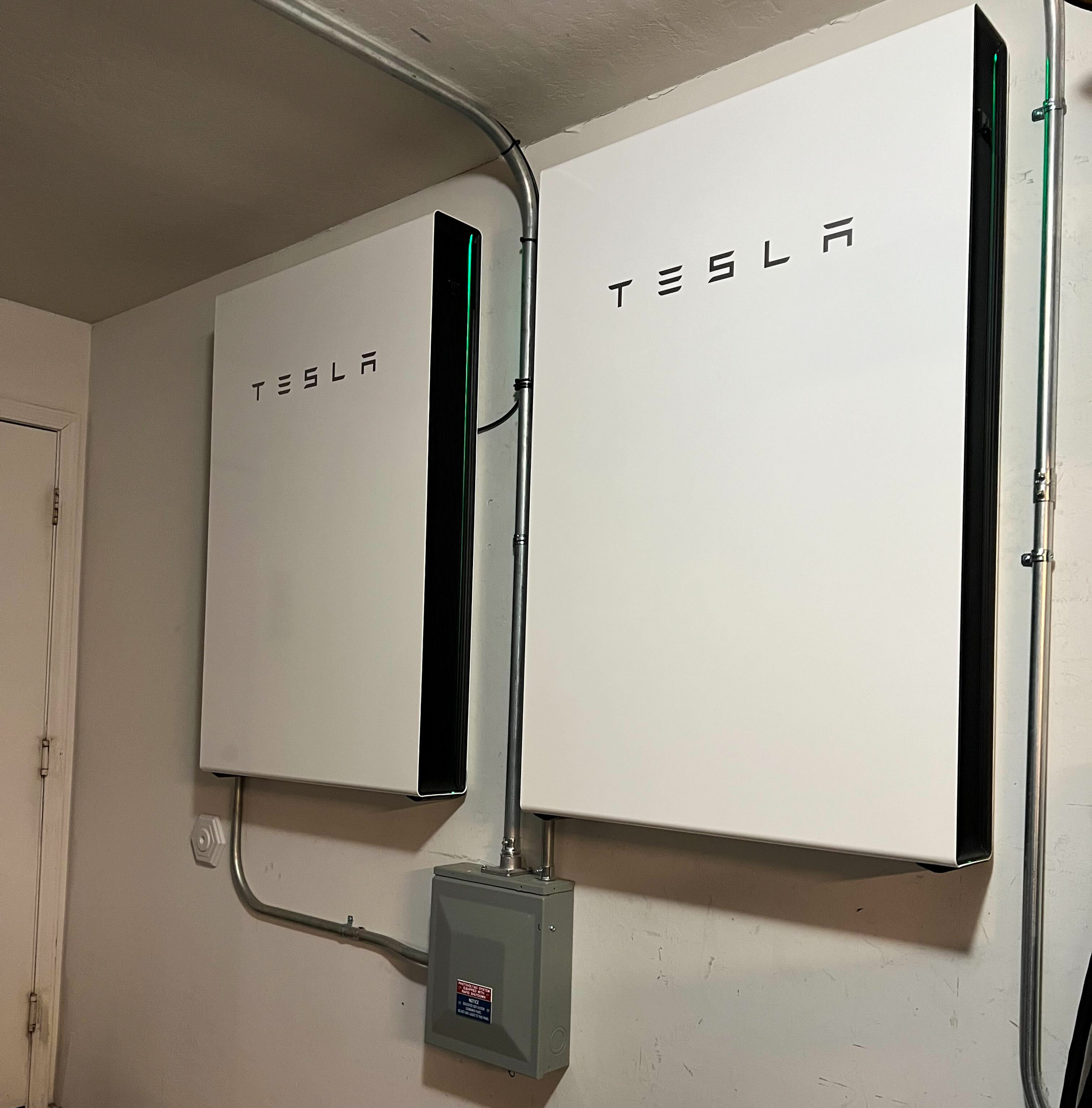
Your garage battery can now moonlight for the city utility. Austin Energy will pay owners of Tesla, Generac and Enphase systems $75 per kilowatt a year to tap them during demand peaks.
The utility said Nov. 16 that its Power Partner Battery pilot, which launched in March for SolarEdge and FranklinWH owners, has expanded to those three brands. Customers get a $500 upfront rebate for systems that got Austin Energy’s permission to operate on or after Feb. 18, 2025, plus the annual performance payment. Austin Energy says active participants can earn more than $300 a year.
How the money works. The program page runs the numbers on a 13.5-kilowatt-hour Tesla Powerwall. Keep a 20% backup reserve, and Austin Energy can draw 10.8 kWh. Spread over an average 2.5-hour event, that’s about 4.3 kilowatts, or roughly $324 a year at $75 per kilowatt.
A small heads-up for anyone checking the math: the FAQ on EnergyHub’s enrollment site uses the same example but lists 3.6 kilowatts, which would pay $270, before landing on $324 anyway. Austin Energy’s own page has it right. EnergyHub, a Brooklyn company, runs the program for the utility, according to the terms and conditions.
What you sign up for. Events can happen any day, at any hour, including holidays, and usually last two to three hours. Austin Energy caps them at 40 a year, not counting grid emergencies, and says it won’t drain a battery below the owner’s backup reserve. The utility says it typically won’t call an event when a severe storm is forecast, so batteries stay charged for outages.
Owners can override an event in their manufacturer’s app without penalty, though opting out lowers the annual payment. Enphase owners must opt out at least five minutes before an event starts. Batteries usually recharge within 24 hours, and Austin Energy says recharging costs will always be less than the incentive.
Who’s left out. Batteries owned or operated by a third party, such as many leased solar-and-storage setups, aren’t eligible. The system must be residential, inside Austin Energy’s service area and installed by a participating contractor. Solar panels aren’t required.
The release also says renters, homeowners and businesses can all earn rewards for helping the grid. That’s true across Austin Energy’s full lineup, which the release says includes Smart Home Rewards, Power Savers and commercial demand response. But you need to own a battery to get paid under this pilot, so renters won’t get much out of it.
Why the utility wants your battery. A virtual power plant pools home batteries, smart thermostats and EV chargers so they act like one power plant. Austin Energy’s 2035 climate plan calls for at least 78 megawatts of demand response by 2027 and 270 by 2035, if economically feasible, counting customer-sited batteries. A 2025 progress presentation put the utility at about 57 megawatts, a preliminary estimate. That leaves roughly 21 megawatts to find in a little over a year.
At about 4.3 kilowatts per Powerwall, closing that gap with batteries alone would take roughly 4,900 of them. Nobody expects batteries to do it alone, but that’s the scale. Austin Energy’s announcement didn’t say how many homes have signed up so far.
The timing matters. The Resource Management Commission has pushed Austin Energy to study carbon-free alternatives, virtual power plants among them, to the gas peaker plant it has proposed, as the Dispatch has reported. A pilot that pays customers for stored power fits that argument. Its usefulness will depend on how many megawatts actually show up.
“Homeowner interest in battery storage has climbed dramatically in recent years,” Richard Génecé, Austin Energy’s vice president of customer energy solutions, said in the release. He said the program lets battery owners “receive annual incentive payments for participating in Austin Energy’s virtual power plant.”
Owners enroll through their battery maker’s app; instructions for each brand are on Austin Energy’s Power Partner Battery page.
Photo: Two Tesla Powerwall 3 units installed in a home. Rsparks3 via Wikimedia Commons, CC0. Illustrative.
