In 2017, Austin promised itself 20,000 new homes over 10 years that its poorest renters could afford. By the end of 2024, seven years in, the city’s own scorecard counted 543.
That number sits at the center of a vote the Austin City Council is scheduled to take on Thursday, Nov. 5. Item 26 on the draft agenda would direct the city manager to rewrite the Austin Strategic Housing Blueprint, the 10-year plan that set the city’s goal of 60,000 affordable homes. The meeting starts at 10 a.m. at City Hall, 301 W. Second St., according to the Council meeting information center. The item is on the non-consent part of the draft agenda, so its exact time isn’t set.
The Dispatch covered the committee vote that sent the rewrite to the full Council on Oct. 13. Before the Council starts writing the next 10 years, here’s a look at what the last one actually delivered, and for whom.
The short version. Austin has done well building homes for people near the middle of the income ladder, often because market rents fell. It has done badly building homes for people at the bottom, where the need is greatest and the market won’t go on its own.
What the 2017 plan promised. The Blueprint set a goal of 135,000 new homes over 10 years, according to the 2024 Blueprint Scorecard that Austin Housing sent the Council in May 2026. That included:
- 60,000 homes for households earning 80% of median family income (MFI) or less
- 75,000 homes for households earning more than 80% of MFI
- District-by-district targets so affordable housing wouldn’t cluster in a few parts of town
Inside the 60,000, the plan split the goal by income band: 20,000 homes for households at or below 30% of MFI, 25,000 for households earning 31% to 60%, and 15,000 for those earning 61% to 80%, the scorecard shows. When the plan was adopted, the city estimated it would take $6 billion to $11 billion in additional resources to hit the 60,000-unit goal.
The scorecard, seven years in. The latest full count covers 2018 through 2024. It was prepared by Austin Housing with the nonprofit HousingWorks Austin, which advocates for affordable housing. According to the progress-to-date scorecard:
- All homes at 80% MFI or below: 32,429 built. The scorecard says the city needed nearly 10,000 more to be on pace after seven years.
- 30% MFI or below: 543 built against a 20,000-home goal. The city built 87 of these in 2024, up from 63 in 2023, against an annual target of 2,000.
- 31% to 60% MFI: 16,067 built against a 25,000-home goal, nearly two-thirds of the way.
- 61% to 80% MFI: 15,819 built, past the 15,000-home goal. It’s the first 10-year income goal Austin has met.
- Preservation: 8,250 existing affordable homes preserved since 2018, against a 10-year goal of 10,000.
- Permanent supportive housing: 333 units developed from 2021 through 2024 against a Council goal of 1,000 in three years. About 790 more are in the pipeline, the scorecard says.
Households earning 30% of MFI or less make up 17% of Austin households, the scorecard says. It says they can afford 0.8% of the new homes built in recent years. Households earning more than 120% of MFI can afford all of them.
Why “affordable” doesn’t always mean income-restricted. This is the part that’s easy to miss. The scorecard counts both income-restricted units and market-rate units that happen to rent or sell at prices a household in a given band can afford. When Austin rents fell, some market-rate homes slid into lower affordability bands, the scorecard explains. Part of the big 2024 jump in homes affordable at 61% to 80% of MFI, which hit 4,287 that year, came from lower rents in new market-rate buildings, it says.
That’s real relief for renters near the middle. But there’s no guarantee it lasts, because nothing legally holds those rents down. The scorecard itself says it’s hard to tell whether the trend will continue.
City staff made a similar point to the Housing and Planning Committee on Oct. 13, according to the meeting transcript, which is machine-generated. Mayor Pro Tem José “Chito” Vela said rents fell in his district’s Lamar-Rundberg area even without much new building nearby and asked how the lesson of building a lot of housing fits the rewrite. Staff agreed that easing construction had helped. But they said market-rate rents can only fall so far. The main need now, they said, is for homes affordable below 50% of MFI and closer to 30% to 40%, which require subsidy. That’s where the city hasn’t met its goals, they said (about 1:35 p.m. in the transcript).
Later in the same meeting, staff estimated Austin is short about 55,000 homes for households under 50% of MFI (about 2:17 p.m. in the transcript). The city’s staff presentation listed the same pattern among its market findings: a major shortage of units affordable to renters below 50% of area median income and salaries not keeping up with the cost of housing.
Where the homes went. The Blueprint also promised affordable housing in every part of town. The 2024 progress-to-date numbers show a lopsided map, according to the scorecard:
- Districts 1 and 2 in East and Southeast Austin had already passed their 10-year goals. District 1 built 7,891 affordable homes against a goal of 7,086.
- Districts 3 and 4 were on track.
- District 8 in Southwest Austin was at 20% of its goal: 1,449 of 7,217.
- District 10 in Northwest and West Austin was at 2.5%: 214 homes against a goal of 8,456, with 32 income-restricted units under construction.
The city also missed a goal of placing 25% of new income-restricted homes in “high opportunity” areas, with better access to jobs, schools and services. It managed 15% over seven years and 11% in 2024, the fourth year in a row it fell short, the scorecard says. Austin Housing is redrawing the map that defines those areas with the University of Texas, and the new version is due in early 2027, according to the staff presentation.
What’s coming that isn’t in the count yet. In a May 7 memo to the Council, Austin Housing Director Deletta Dean wrote that 2025 saw a 21% increase over 2024 in newly leased units affordable at 50% of MFI or below in developments funded or incentivized by the city. She also wrote that another 10,106 homes from city programs were under construction or had closed on financing, including 2,938 affordable at 50% of MFI or below. The memo said the 2025 scorecard data would come out in fall 2026. As of Oct. 30, the city’s Blueprint page still listed the 2024 scorecard as the latest.
What the Council would order on Nov. 5. The committee-approved resolution (Version 2) directs the city manager to update the Blueprint with:
- new production and preservation goals for affordable and “attainable” housing
- an analysis of housing needs, supply and growth
- displacement-prevention strategies
- clear metrics for annual progress reports
Its findings name the need for more homes for households below 30% of MFI, more family-sized units and more units in high-opportunity areas. The resolution also says the Council wants the update to inform a potential 2028 bond program. Staff told the committee they’re aiming for Council adoption of a new Blueprint in mid-2028, according to the transcript (about 1:32 p.m.). The work is paid for in part by a $6.7 million federal Pathways to Removing Obstacles to Housing grant, $750,000 of which goes to updating the Blueprint and the opportunity map, according to the city.
Why it matters. The city says home prices have risen 58% since the Blueprint’s goals were set in the mid-2010s and that rents remain high, according to its Blueprint page. The 543 homes that people at the bottom could afford are a reminder of who gets left out when a plan’s headline numbers look good. Austin’s lowest-income renters include many of the workers who keep the city running. If the next Blueprint is going to shape a bond that voters may see in 2028, the Nov. 5 vote is where the Council starts deciding whether the next 10 years aim at the gap the last 10 left open.
How to weigh in. Speaker registration for the Nov. 5 meeting opens Monday, Nov. 2, at 10 a.m., according to the Council meeting information center. The meeting page has the agenda and backup documents. The agenda posted as of Oct. 30 is a draft, and item numbers can change.
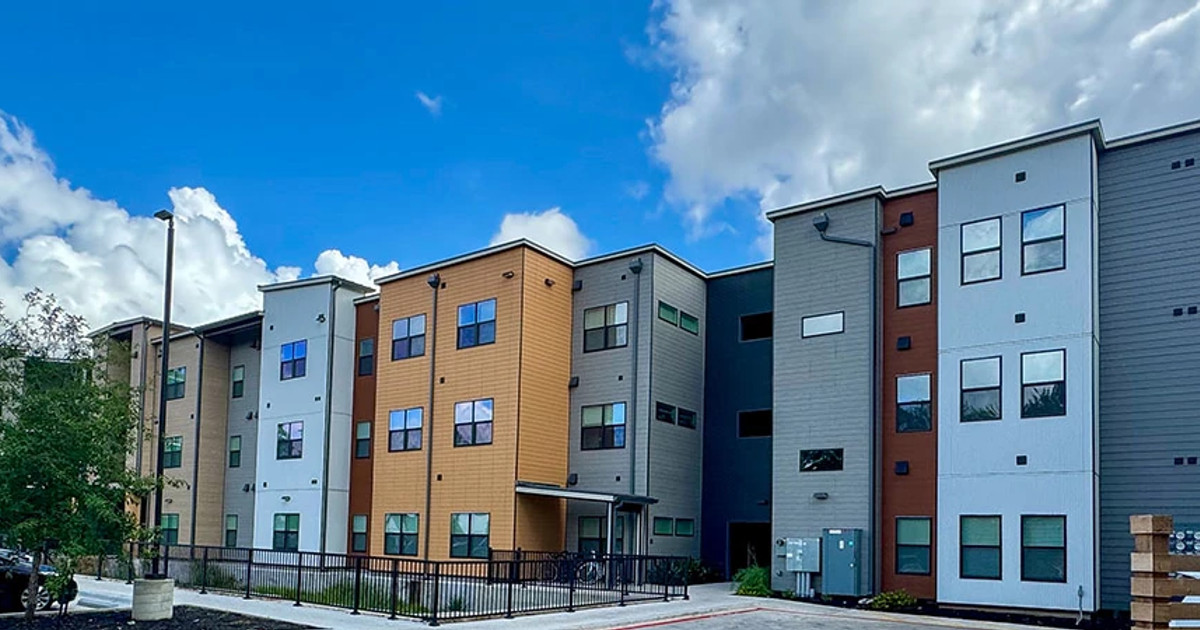
Photo: An apartment building pictured on Austin Housing’s Strategic Housing Blueprint page. (City of Austin / Austin Housing)